When Galaxies CollideWhen Galaxies Collide
<p style="text-align: center;"></p> <p>Galaxies are not as isolated as they at first glance may seem; on a cosmic scale they congregate in clumps along with dark matter and hot gas. The

<p style="text-align: center;"></p> <p>Galaxies are not as isolated as they at first glance may seem; on a cosmic scale they congregate in clumps along with dark matter and hot gas. The

<p style="text-align:center"></p> <p>When we gaze up at the night sky, we are only seeing part of the story. Unfortunately, some of the most powerful and energetic events in the Universe are
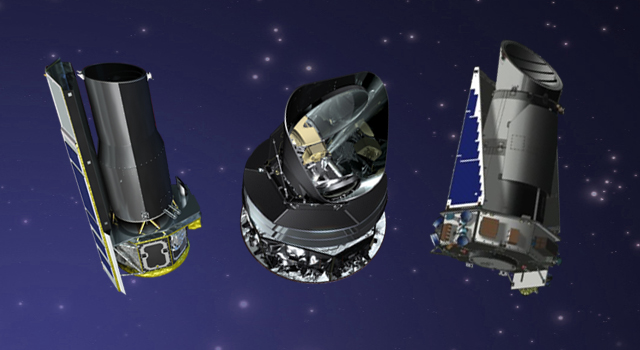
<p style="text-align: center;"></p> <p>From the tiniest fraction of a second after the Big Bang to the evolution of stars and galaxies over 13.8 billion years, ESA’s Planck space telescope has provided

<p style="text-align:center"></p> <p>Using a telescope in Antarctica and ESA’s Herschel space observatory, astronomers have made the first detection of a subtle twist in the relic radiation from the Big Bang, paving
<p><a target="_blank" rel="nofollow" href="http://www.theskynet.org"></a>Idle home computers are being sought to help search through tons of astronomical data. <a target="_blank" rel="nofollow" href="http://www.theskynet.org">The Skynet</a> project involves using the spare processing capacity of