The X-Ray SunThe X-Ray Sun
<p></p> <p>For the first time, a mission designed to set its eyes on black holes and other objects far from our solar system has turned its gaze back closer to home,

<p></p> <p>For the first time, a mission designed to set its eyes on black holes and other objects far from our solar system has turned its gaze back closer to home,

<p></p> <p>Most celestial events unfold over thousands of years or more, making it impossible to follow their evolution on human timescales. Supernovas are notable exceptions, the powerful stellar explosions that make
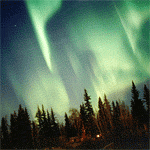
<p></p> <p>Auroras are the most visible manifestation of the Sun’s effect on Earth, but many aspects of these spectacular displays are still poorly understood. Thanks to ESA’s Cluster and NASA’s Image
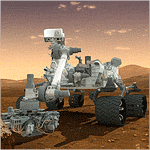
<p><a href="http://science.nasa.gov/media/medialibrary/2014/12/16/splash5b.jpg" target="_blank"></a></p> <p>NASA’s Mars Curiosity rover has measured a tenfold spike in methane, an organic chemical, in the atmosphere around it and detected other organic molecules in a rock-powder sample
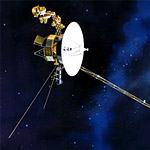
<p></p> <p>Since 2012, NASA’s Voyager 1 spacecraft has experienced three ‘tsunami waves’ in interstellar space. The most recent, which reached the spacecraft earlier this year, is still propagating outward according
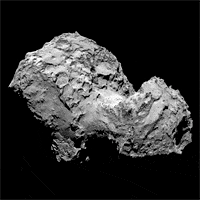
<p></p> <p>Where did our planet get its oceans? Among planetary scientists, this is one of the most important and perplexing questions about the origins of Earth.</p> <p>One popular theory holds that water

<p></p> <p>Scientists have calculated that the <a target="_blank" href="http://rt.com/news/201827-dangerous-asteroid-discovered-ur116/">2014 UR116 asteroid</a> will fly in dangerous proximity to Earth every three years. If it collides with the planet the energy of the
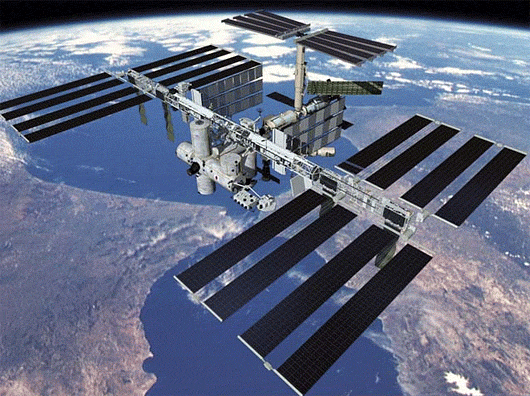
<p></p> <p>ESA’s fifth and last Automated Transfer Vehicle tested a new technique before docking with the International Space Station in August, at the same time revealing the orbital complex in a
<p></p> <p>This Cassini image shows Jupiter from an unusual perspective. If you were to float just beneath the giant planet and look directly up, you would be greeted with this striking

<p></p> <p>Observations by NASA’s Curiosity Rover indicate Mars’ Mount Sharp was built by sediments deposited in a large lake bed over tens of millions of years.</p> <p>This interpretation of Curiosity’s finds in