NASA’s Dawn spacecraft, the first ever to orbit an object in the main asteroid belt, is spiraling towards its first of four intensive science orbits. That initial orbit of the rocky world Vesta begins Aug. 11, at an altitude of nearly 1,700 miles (2,700 kilometers) and will provide in-depth analysis of the asteroid. Vesta is the brightest object in the … Read the rest of this article
NASA Scientisis Discover Water Content of Lunar Magma Is 100 Times Higher Than Previous Studies Suggested
June 3, 2011
A team of NASA-funded researchers has measured for the first time water from the Moon in the form of tiny globules of molten rock, which have turned to glass-like material trapped within crystals. Data from these newly discovered lunar melt inclusions indicate the water content of lunar magma is 100 times higher than previous studies suggested.
Read the rest of this article
This microscope photo shows …
NASA Dawn Mission Gets Vesta Target Practice
March 11, 2011
There is an old chestnut about a pedestrian who once asked a virtuoso violinist near Carnegie Hall how to get to the famed concert venue. The virtuoso’s answer: practice!
This video shows the scientists’ best guess to date of what the surface of the protoplanet Vesta might look like. It was created as part of an exercise for NASA’s Dawn … Read the rest of this article
Perseid Meteor Shower, 2010
August 11, 2010
Astronomers are predicting a dazzling display of shooting stars on the night of August 12/13 as the Perseid meteor shower reaches a peak in activity.
The show begins at sunset when Venus, Saturn, Mars and the crescent Moon pop out of the western twilight in tight conjunction. All four heavenly objects will fit within a circle about 10 degrees in … Read the rest of this article
A new comet is swinging through the inner solar system, and it is brightening rapidly as it approaches Earth for a 100 million mile close encounter in mid-June.
Comet McNaught (C/2009 R1) has a vivid green head and a long wispy tail that looks great through small telescopes.
By the end of the month it could be visible to the … Read the rest of this article
A Green Comet Approaches Earth
February 11, 2009
In 1996, a 7-year-old boy in China bent over the eyepiece of a small telescope and saw something that would change his life – a comet of flamboyant beauty, bright and puffy with an active tail. At first he thought he himself had discovered it, but no, he learned, two men named “Hale” and “Bopp” had beat him to it. … Read the rest of this article
Dawn Spacecraft Launched
September 27, 2007
|
|
NASA’s Dawn spacecraft began its 1.7 billion mile journey through the inner solar system to study a pair of asteroids Thursday at 7:34 a.m. EDT.
The Delta 2 rocket, fitted with nine strap-on solid-fuel boosters, safely climbed away from the Florida coastline and launch complex … Read the rest of this article
NASA Announces New Spacecraft Assignments
July 4, 2007
Two NASA spacecraft now have new assignments after successfully completing their missions. The duo will make new observations of comets and characterize extrasolar planets. Stardust and Deep Impact will use their flight-proven hardware to perform new, previously unplanned, investigations.
“These mission extensions are as exciting as it gets. They will allow us to revisit a comet for the first time, … Read the rest of this article
The Kuiper Belt
February 2, 2006
Starting in 1992, astronomers have become aware of a vast population of small bodies orbiting the sun beyond Neptune. There are at least 70,000 “trans-Neptunians” with diameters larger than 100 km in the radial zone extending outwards from the orbit of Neptune (at 30 AU) to 50 AU. Observations show that the trans-Neptunians are mostly confined within a thick … Read the rest of this article
About Comets
March 6, 2001
Comets are small Solar System bodies that orbit the Sun and, when close enough to the Sun, exhibit a visible coma (atmosphere) or a tail — both primarily from the effects of solar radiation upon the comet’s nucleus. Comet nuclei are themselves loose collections of ice, dust and small rocky particles, measuring a few kilometers or tens of kilometers across.… Read the rest of this article


Free Affiliate Marketing Training


The Sun And Aurora Now
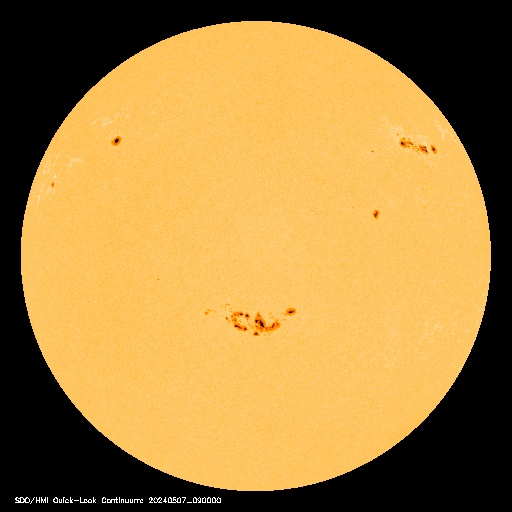
The Sun Now (Visible light)
|
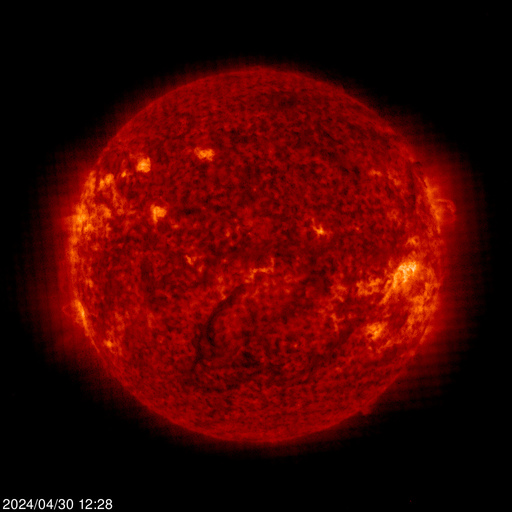
The Sun Now (H-Alpha light)
|
|
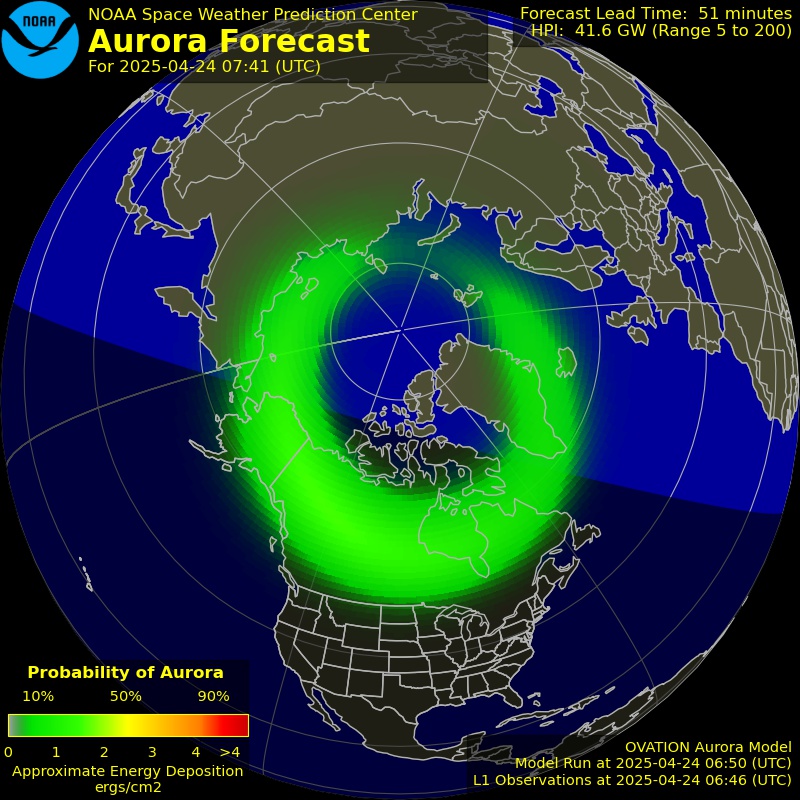
Aurora Oval
(Northern Hemisphere) |
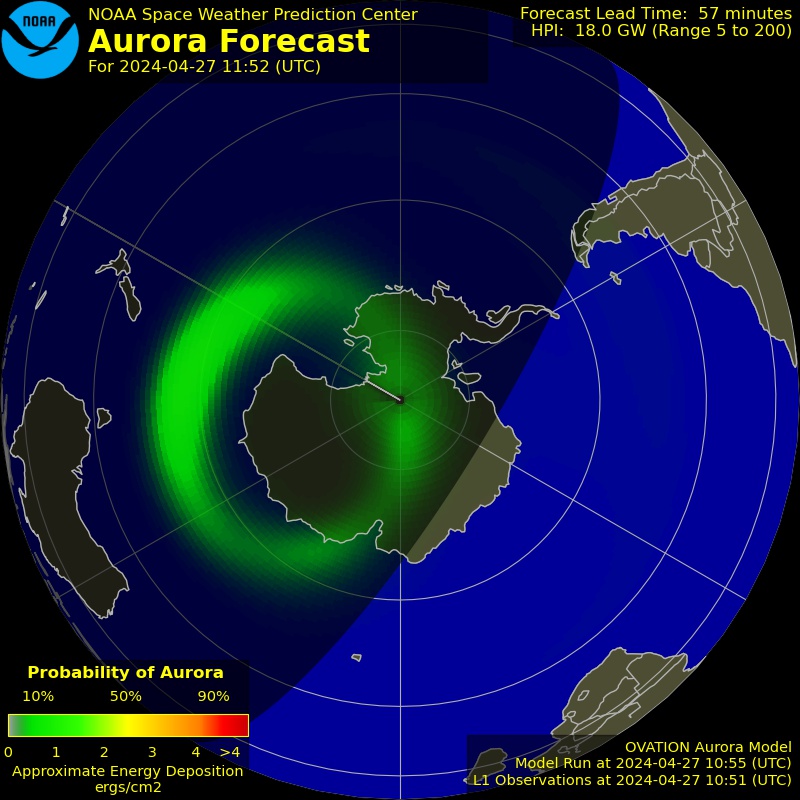
Aurora Oval
(Southern Hemisphere) |
|