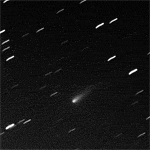
Observations indicate that the sudden exposure to strong sunlight when the currently dark side of the comet gets closer to the Sun could trigger huge outbursts.

Scientists are unraveling more information on Comet ISON (C/2012 S1) as it continues on its journey toward the Sun. ISON will skim 730,000 miles (1.3 million kilometers) above the Sun’s surface November 28 and …

Read the rest of this article
A useful point of comparison is Comet Lovejoy, which put on a grand show after it brushed the sun in 2011. People in the southern hemisphere still remember the comet’s tail stretching halfway across the night sky. Judging from the brightness of Comet ISON, Matthew Knight of the Lowell Observatory believes that “ISON is likely a few times bigger than …

Read the rest of this article

ESA’s space missions are getting ready to observe an icy visitor to the inner Solar System: Comet ISON, which might also be visible in the night sky later this year as a naked eye object.

The comet was discovered in images taken on 21 September 2012 by astronomers Artyom Novichonok and Vitali Nevski using a 40 cm-diameter telescope that is …

Read the rest of this article

Insight Mars Mission

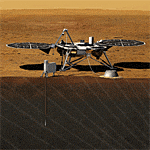
NASA has narrowed to four the number of potential landing sites for the agency’s next mission to the surface of Mars, a 2016 lander to study the planet’s interior.

The stationary Interior Exploration Using Seismic Investigations, Geodesy and Heat Transport (InSight) lander is scheduled to launch in March 2016 and land on Mars six months later. It will touch down …

Read the rest of this article
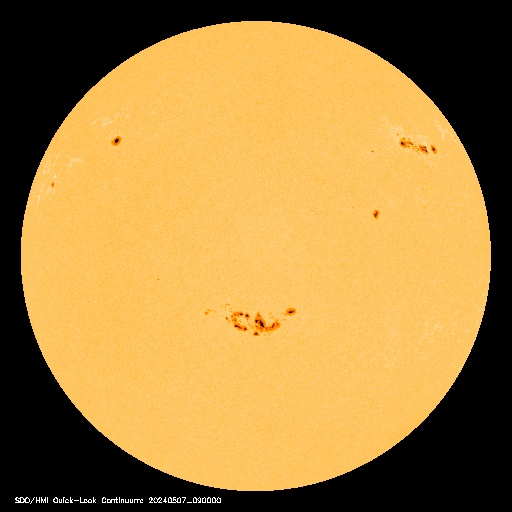
One of the most legendary PR disasters in the history of astronomy happened in 1973 when the world awaited the arrival of comet Kohoutek, discovered by Czech amateur astronomer Luboš Kohoutek early that year. Once the orbit was plotted, astronomers knew that the comet was a first time visitor from the hypothesized Oort Cloud, a gigantic 2 light-year wide …

Read the rest of this article
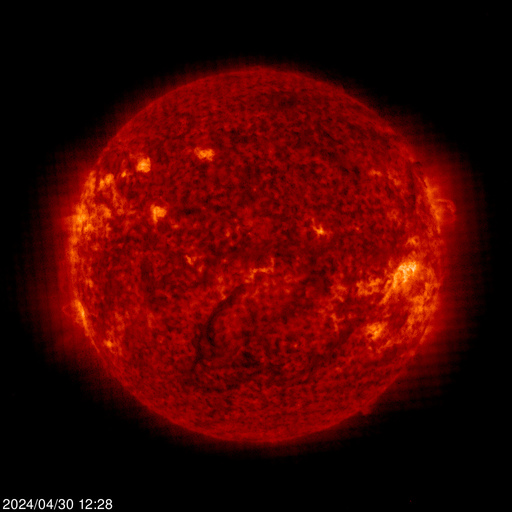
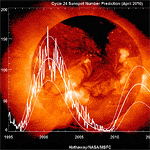
Something big is about to happen on the sun. According to measurements from NASA-supported observatories, the sun’s vast magnetic field is about to flip.

“It looks like we’re no more than 3 to 4 months away from a complete field reversal,” says solar physicist Todd Hoeksema of Stanford University. “This change will have ripple effects throughout the solar system.”

The …

Read the rest of this article
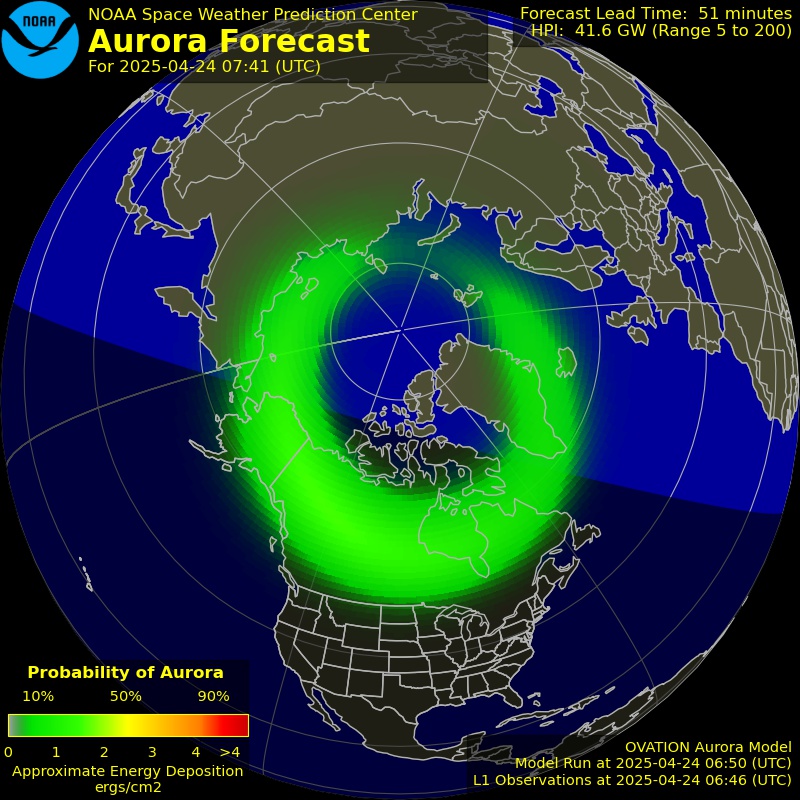
The true identity of centaurs, the small celestial bodies orbiting the sun between Jupiter and Neptune, is one of the enduring mysteries of astrophysics. Are they asteroids or comets? A new study of observations from NASA’s Wide-field Infrared Survey Explorer (WISE) finds most centaurs are comets.

Until now, astronomers were not certain whether centaurs are asteroids flung out from the …

Read the rest of this article
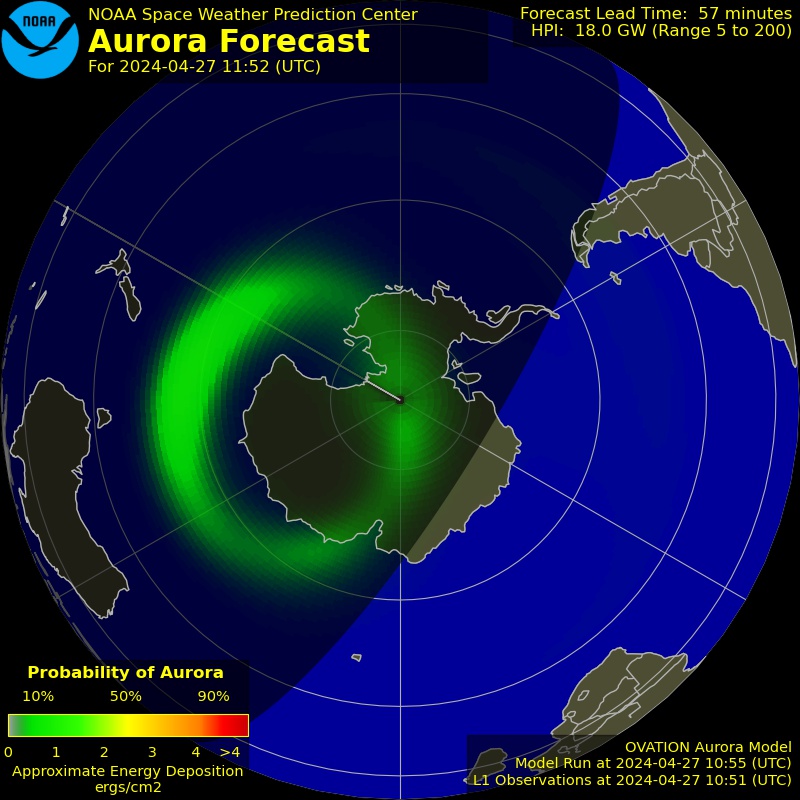
Astronomers using NASA’s Spitzer Space Telescope have observed what most likely are strong carbon dioxide emissions from Comet ISON ahead of its anticipated pass through the inner solar system later this year.

Images captured June 13 with Spitzer’s Infrared Array Camera indicate carbon dioxide is slowly and steadily “fizzing” away from the so-called “soda-pop comet,” along with dust, in a …

Read the rest of this article

Anticipation is building as Comet ISON plunges into the inner solar system for a close encounter with the sun in November 2013. Blasted at point-blank range by solar radiation, the sungrazer will likely become one of the finest comets in many years.

When NASA’s Swift spacecraft observed the comet in January 2013, it was still near the orbit of Jupiter, …

Read the rest of this article

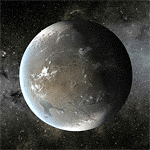
NASA’s Kepler mission has discovered two new planetary systems that include three super-Earth-size planets in the “habitable zone,” the range of distance from a star where the surface temperature of an orbiting planet might be suitable for liquid water.


The artist’s concept depicts Kepler-62f, a super-Earth-size planet in the habitable zone of a star smaller and cooler than the sun, …

Read the rest of this article