This is a Hubble Space Telescope composite image of a supernova explosion designated SN 2014J in the galaxy M82. At a distance of approximately 11.5 million light-years from Earth it is the closest supernova of its type discovered in the past few decades. The explosion is categorized as a Type Ia supernova, which is theorized to be triggered in binary …

Read the rest of this article

One of the biggest mysteries in astronomy, how stars blow up in supernova explosions, finally is being unraveled with the help of NASA’s Nuclear Spectroscopic Telescope Array (NuSTAR).

The high-energy X-ray observatory has created the first map of radioactive material in a supernova remnant. The results, from a remnant named Cassiopeia A (Cas A), reveal how shock waves likely rip …

Read the rest of this article

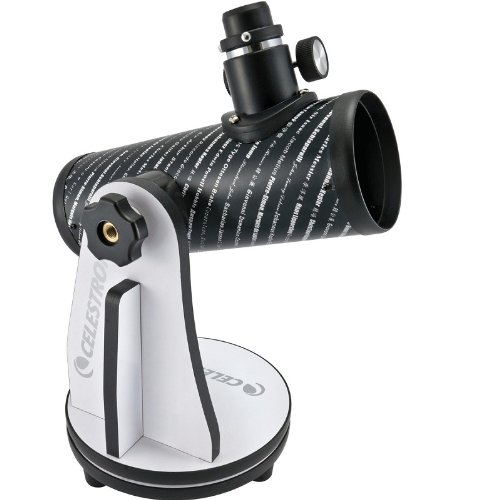
This is an entry level scope that is highly recommended for anyone who is taking their first steps into astronomy. Given the lack of any computerized feature and or finderscope, it really makes the newcomer adjust and learn how to find objects using a reflector telescope with and without an eyepiece.

The telescope is mounted on a Dobsonian mount – …

Read the rest of this article

Mars

Researchers have determined the now-infamous Martian rock resembling a jelly doughnut, dubbed Pinnacle Island, is a piece of a larger rock broken and moved by the wheel of NASA’s Mars Exploration Rover Opportunity in early January.

Only about 1.5 inches wide (4 centimeters), the white-rimmed, red-centered rock caused a stir last month when it appeared in an image the rover …

Read the rest of this article

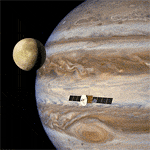
More than 400 years after its discovery by astronomer Galileo Galilei, the largest moon in the solar system – Jupiter’s moon Ganymede – has finally claimed a spot on the map.

A group of scientists led by Geoffrey Collins of Wheaton College has produced the first global geologic map of Ganymede, Jupiter’s seventh moon. The map combines the best images …

Read the rest of this article

NASA trained several pairs of eyes on Saturn as the planet put on a dancing light show at its poles. While NASA’s Hubble Space Telescope, orbiting around Earth, was able to observe the northern auroras in ultraviolet wavelengths, NASA’s Cassini spacecraft, orbiting around Saturn, got complementary close-up views in infrared, visible-light and ultraviolet wavelengths. Cassini could also see northern and …

Read the rest of this article

A team of European astronomers has found a previously unknown comet, detected as a tiny blob of light orbiting our Sun deep in the Solar System.

Europe’s Teide Observatory Tenerife Asteroid Survey team has been credited with discovering comet P/2014 C1, named ‘TOTAS’ in recognition of the teamwork involved in the find.

The comet was unexpectedly discovered on 1 February …

Read the rest of this article

AAVSO AAVSO Alert Notice 497
Nova Sagittarii 2014 = PNV J18250860-2236024
February 11, 2014

1. Event: Nova Sagittarii 2014 = PNV J18250860-2236024

Discovered by: Sigeru Furuyama (Tone-machi, Ibaraki-ken, Japan) and reported by S. Nakano (Sumoto, Japan)

Discovery magnitude: unfiltered CCD magnitude 8.7, using a 200-mm f/2.8 camera lens + BJ-42L camera

Discovery date: 2014 Jan. 26.857 UT

Coordinates: R.A. 18 25 …

Read the rest of this article

Help Hubble scientists in the adventure of discovery.

They need your eyes to identify the ages of star clusters in the Southern Pinwheel Galaxy, M83.

Human beings are much better than computers at making the kinds of distinctions needed to gauge the ages of the clusters, so have a seat and join the fun.

Their interactive online project, Star Date:

Read the rest of this article

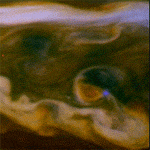
Like a swirl from a paintbrush being dipped in water, this image from the Cassini orbiter shows the progress of a massive storm on Saturn. The storm first developed in December 2010, and this mosaic captures how it appeared on 6 March 2011.

The head of the storm is towards the left of the image, where the most turbulent activity …

Read the rest of this article