Mars

Catastrophic flooding triggered by ice melting from the heat of volcanic activity is thought to be responsible for the chaotic scenery depicted in this region of the Mangala Valles channel network.


This context image shows part of the Mangala Valles region of Mars that was imaged by the High Resolution Stereo Camera on ESA’s Mars Express on 12 July 2015 …

Read the rest of this article

NASA’s Launch Services Program (LSP) has awarded multiple Venture Class Launch Services (VCLS) contracts to provide small satellites (SmallSats) — also called CubeSats, microsats or nanosatellites — access to low-Earth orbit.

The three companies selected to provide these new commercial launch capabilities, and the value of their firm fixed-price contracts, are:

  • Firefly Space Systems Inc. of Cedar Park, Texas, $5.5

Read the rest of this article

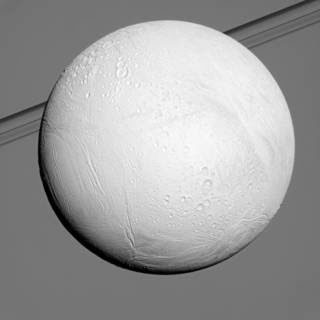
Satrurn's Moon Enceladus

NASA’s Cassini spacecraft will wrap up its time in the region of Saturn’s large, icy moons with a series of three close encounters with Enceladus starting Wednesday, Oct. 14. Images are expected to begin arriving one to two days after the flyby, which will provide the first opportunity for a close-up look at the north polar region of Enceladus.

Wednesday’s …

Read the rest of this article

New Hubble Image of Jupiter's Great Red Spot

Scientists using NASA’s Hubble Space Telescope have produced new maps of Jupiter — the first in a series of annual portraits of the solar system’s outer planets.

Collecting these yearly images — essentially the planetary version of annual school picture days for children — will help current and future scientists see how these giant worlds change over time. The observations …

Read the rest of this article

BepiColombo

BepiColombo is Europe’s first mission to Mercury. It will set off in 2017 on a journey to the smallest and least explored terrestrial planet in our Solar System, following in the footsteps of Mariner 10 and Messenger.

On 4 October, ESA’s ESTEC technical centre opened its doors to the public. On display that day were the two BepiColombo orbiters …

Read the rest of this article

AAVSO AAVSO Alert Notice 530
Nova Aquilae 2015 = ASASSN 15-qd = PNV J19215012+1509248
October 8, 2015

Event: Nova Aquilae 2015 = ASASSN 15-qd = PNV J19215012+1509248

Independent discovery by:
– Koichi Itagaki (Teppo-cho, Yamagata, Japan), reported by S. Nakano (Sumoto, Japan)
– All-Sky Automated Survey for Supernovae (ASAS-SN, http://www.astronomy.ohio-state.edu/~assassin/index.shtml), reported by B. J. Shappee (Hubble Fellow, Carnegie Observatories) et …

Read the rest of this article

Southern polar regions of comet 67P/Churyumov-Gerasimenko

Since its arrival at comet 67P/Churyumov-Gerasimenko, the European Space Agency’s Rosetta spacecraft has been surveying the surface and the environment of this curiously shaped body. But for a long time, a portion of the nucleus — the dark, cold regions around the comet’s south pole — remained inaccessible to almost all instruments on the spacecraft.

Due to a combination of …

Read the rest of this article

AAVSO AAVSO Alert Notice 529
Observing campaign on 5 variables in Cygnus
October 1, 2015

Dr. George Wallerstein (University of Washington) has requested AAVSO assistance in monitoring 5 variable stars in Cygnus now through December 2015. He is working to complete the radial velocity curves for these stars, and needs optical light curves for correlation with the spectra he will be …

Read the rest of this article

Rosetta Mission

ESA’s Rosetta spacecraft has provided evidence for a daily water-ice cycle on and near the surface of comets.

Comets are celestial bodies comprising a mixture of dust and ices, which they periodically shed as they swing towards their closest point to the Sun along their highly eccentric orbits.

As sunlight heats the frozen nucleus of a comet, the ice in …

Read the rest of this article

Solar System Ambassadors Program

The NASA/Jet Propulsion Laboratory (JPL) Solar System Ambassadors Program (SSA) invites you to apply to become an ambassador to the public for calendar year 2016.

Highly motivated individuals will be given the opportunity to represent NASA and JPL as volunteer Solar System Ambassadors to the public for a one-year, renewable term beginning January 1, 2016. Applications will be accepted from …

Read the rest of this article