Abell 78

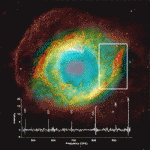
Beneath the vivid hues of this eye-shaped cloud, named Abell 78, a tale of stellar life and death is unfolding. At the centre of the nebula, a dying star – not unlike our Sun – which shed its outer layers on its way to oblivion has, for a brief period of time, come back to echo its past glory.

Releasing …

Read the rest of this article

The intricate jumble depicted in this image from ESA’s Herschel space observatory shows the distribution of gas and dust in the Taurus Molecular Cloud, a giant stellar nursery about 450 light-years away in the constellation Taurus, the Bull.

Launched in 2009, Herschel studied the sky at far-infrared wavelengths for almost four years, detecting the glow of cosmic dust in the …

Read the rest of this article

Water in Space

As NASA missions explore our solar system and search for new worlds, they are finding water in surprising places. Water is but one piece of our search for habitable planets and life beyond Earth, yet it links many seemingly unrelated worlds in surprising ways.

“NASA science activities have provided a wave of amazing findings related to water in recent years …

Read the rest of this article
Here on Earth, under the protection of the layers of our atmosphere, we can still find the heat from the Sun sometimes almost unbearable. This is also a problem for space-based telescopes like the James Webb Space Telescope (JWST).

Once in its operational orbit, JWST will be exposed directly to the Sun’s intense glare – not ideal when most of …

Read the rest of this article

The spiral galaxy M33, also known as the Triangulum Galaxy, is one of our closest cosmic neighbours, just three million light-years away. Home to some forty billion stars, it is the third largest in the Local Group of galaxies after the Andromeda Galaxy (M31) and our own Milky Way.

M33 is popular with astrophotographers and from exceptionally dark sites it …

Read the rest of this article

Astronomers using ESA’s Herschel space observatory to probe the turbulent beginnings of a Sun-like star have found evidence of mighty stellar winds that could solve a puzzling meteorite mystery in our own back yard.

In spite of their tranquil appearance in the night sky, stars are scorching furnaces that spring to life through tumultuous processes – and our 4.5 billion-year-old …

Read the rest of this article

Just as children are sorted into age groups at school, so the seeds of new stars can also be found in ‘classes’ of others of similar ages. This is especially true when the birth of stars in a cloud of gas and dust is triggered by an external event, like the explosion of a nearby supernova.

This image from ESA’s …

Read the rest of this article

Using ESA’s Herschel space observatory, astronomers have discovered that a molecule vital for creating water exists in the burning embers of dying Sun-like stars.

When low- to middleweight stars like our Sun approach the end of their lives, they eventually become dense, white dwarf stars. In doing so, they cast off their outer layers of dust and gas into space, …

Read the rest of this article
The Herschel Space Observatory has uncovered a weird ring of dusty material while obtaining one of the sharpest scans to date of a huge cloud of gas and dust, called NGC 7538. The observations have revealed numerous clumps of material, a baker’s dozen of which may evolve into the most powerful kinds of stars in the universe. Herschel is a …

Read the rest of this article
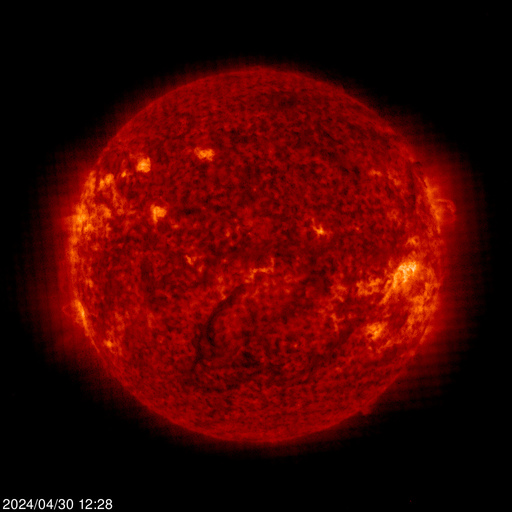
Pluto and Charon

ESA’s Herschel space observatory has observed 132 of the known 1400 cold worlds that inhabit a region of the Solar System beyond the orbit of Neptune, some 4.5–7.5 billion km from the Sun.

These ‘trans-Neptunian objects’, or TNOs, include worlds such as Pluto, Eris, Haumea and Makemake, and make up a vast population of such objects thought to occupy these …

Read the rest of this article