Earth’s magnetic field reverberated from a Coronal Mass Ejection (CME) impact during the early hours of Jan. 22nd. The hit compressed Earth’s magnetic field, briefly exposing some geosynchronous satellites to solar wind plasma, and disturbed the ionization structure of Earth’s upper atmosphere.
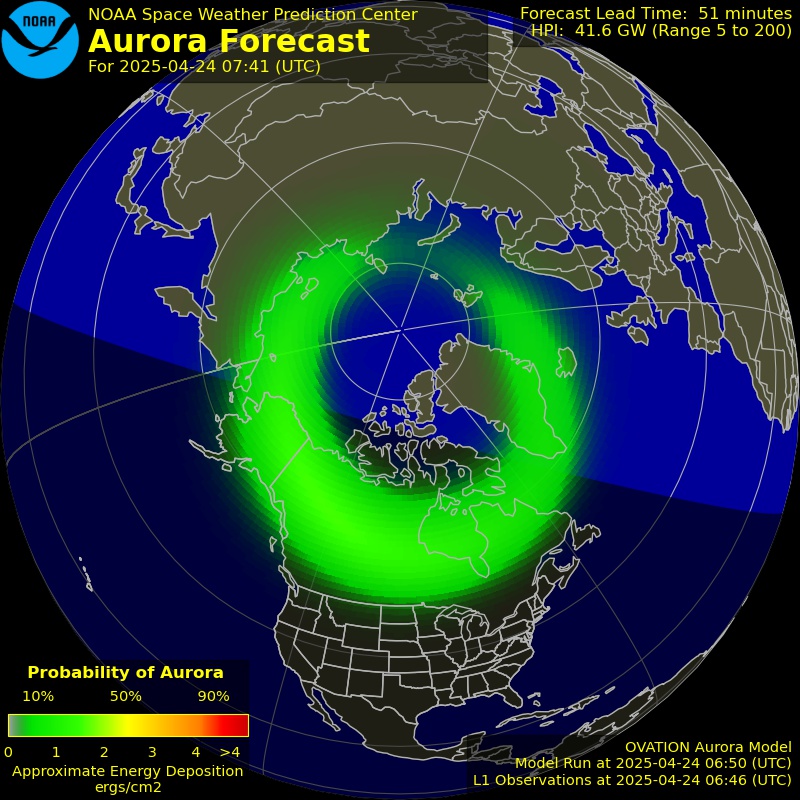
As night fell on Jan. 22nd, Arctic sky watchers reported bright auroras in response to a polar geomagnetic storm (Kp=5).
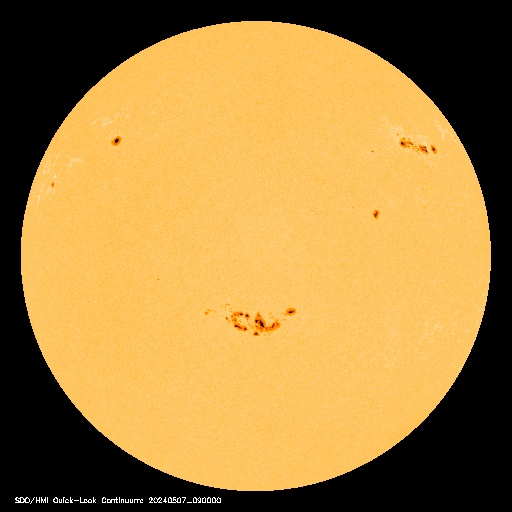
Big sunspot 1402 then erupted on Jan. 23rd, producing a strong M9-class solar flare and a fast-moving coronal mass ejection.
Analysts at the Goddard Space Weather Lab say the CME should reach Earth on Jan. 24th at 14:18 UT (+/- 7 hr) and Mars a little more than a day later.
Strong geomagnetic storms are possible when the cloud reaches Earth. Our magnetic field is still reverberating from a CME impact on Jan. 22nd, so another blow could spark impressive auroras at high latitudes. Sky watchers in northern Europe, Canada, Alaska, and northern-tier US states such as the Dakotas, Minnesota and Wisconsin should be alert for Northern Lights.
Solar protons accelerated by this morning’s M9-class solar flare are streaming past Earth. On the NOAA scale of radiation storms, this one ranks S3, which means it could, e.g., cause isolated reboots of computers onboard Earth-orbiting satellites and interfere with polar radio communications. An example of satellite effects: The “snow” in this SOHO coronagraph movie is caused by protons hitting the observatory’s onboard camera:

The flare’s M9-ranking puts it on the threshold of being an X-flare, the most powerful kind. Here’s a video showing the flare in action:
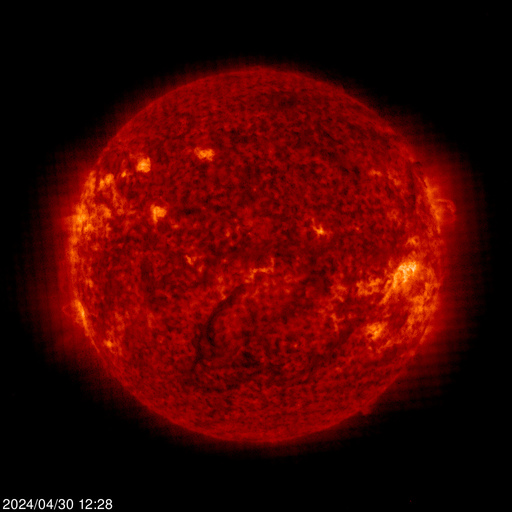
The Solar Dynamics Observatory captured the flare, shown here in teal as that is the color typically used to show light in the 131 Angstrom wavelength, a wavelength in which it is easy to view solar flares. The flare began at 10:38 PM ET on Jan. 22, peaked at 10:59 PM and ended at 11:34 PM.
Filed under: The Sun