Researchers using NASA’s Hubble Space Telescope and Chandra X-ray Observatory have uncovered young, massive, compact galaxies whose raucous star-making parties are ending early. The firestorm of star birth has blasted out most of the remaining gaseous fuel needed to make future generations of stars. Now the party’s over for these gas-starved galaxies, and they are on track to possibly becoming …

Read the rest of this article

google_ad_client = "pub-0618161213732930"; google_ad_width = 468; google_ad_height = 60; google_ad_format = "468x60_as"; google_ad_type = "text"; google_ad_channel =""; google_color_border = "FFFFFF"; google_color_bg = "FFFFFF"; google_color_link = "003399"; google_color_url = "808080"; google_color_text = "000000";

On October 19, 2014 the Hubble Space Telescope gathered observations of the close flyby of Comet Siding Spring with Mars.

Join Tony Darnell Dr Carol Christian and Scott …

Read the rest of this article

This composite Hubble Space Telescope image (click image for larger view) captures the positions of Comet Siding Spring and Mars in a never-before-seen close passage of a comet by the Red Planet, which happened at 2:28 p.m. EDT October 19, 2014. On that date the comet passed by Mars at approximately 87,000 miles (about one-third the distance between Earth and …

Read the rest of this article

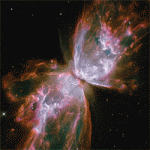
Many celestial objects are beautiful – swirling spiral galaxies or glittering clusters of stars are notable examples. But some of the most striking scenes are created during the death throes of intermediate-mass stars, when great clouds of superheated gas are expelled into space. These dying breaths form planetary nebulas like NGC 6302, captured here in this image from the NASA/ESA …

Read the rest of this article

NASA’s extensive fleet of science assets, particularly those orbiting and roving Mars, have front row seats to image and study a once-in-a-lifetime comet flyby on Sunday, Oct. 19.

Comet C/2013 A1, also known as comet Siding Spring, will pass within about 87,000 miles (139,500 kilometers) of the Red Planet — less than half the distance between Earth and our moon …

Read the rest of this article

Astronomers have found a pulsating, dead star beaming with the energy of about 10 million suns. This is the brightest pulsar – a dense stellar remnant left over from a supernova explosion – ever recorded. The discovery was made with NASA’s Nuclear Spectroscopic Telescope Array, or NuSTAR.

“You might think of this pulsar as the ‘Mighty Mouse’ of stellar remnants,” …

Read the rest of this article

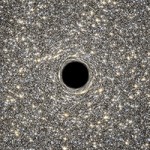
Astronomers have found an unlikely object in an improbable place: a monster black hole lurking inside one of the tiniest galaxies known.

Though the black hole is five times the mass of the black hole at the center of our Milky Way, it is inside a galaxy that crams 140 million stars within a diameter of about 300 light-years, only …

Read the rest of this article

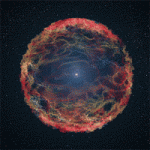
Astronomers using NASA’s Hubble Space Telescope have discovered a companion star to a rare type of supernova. This observation confirms the theory that the explosion originated in a double-star system where one star fueled the mass-loss from the aging primary star.

This detection is the first time astronomers have been able to put constraints on the properties of the companion …

Read the rest of this article

Children with visual disabilities can experience striking deep-space images like never before in a free, multi-touch iBooks textbook for the iPad entitled “Reach for the Stars: Touch, Look, Listen, Learn.” The book can be downloaded free from Apple’s iBooks Store here.

Astronomers at the Space Telescope Science Institute (STScI) have teamed up with the SAS Corporation, the National Braille …

Read the rest of this article

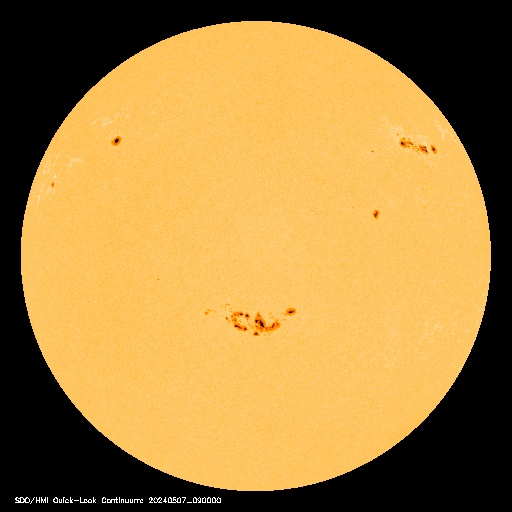
Here on Earth, under the protection of the layers of our atmosphere, we can still find the heat from the Sun sometimes almost unbearable. This is also a problem for space-based telescopes like the James Webb Space Telescope (JWST).

Once in its operational orbit, JWST will be exposed directly to the Sun’s intense glare – not ideal when most of …

Read the rest of this article