Astronomers have come up with a new way of identifying close, faint stars with NASA’s Galaxy Evolution Explorer satellite. The technique should help in the hunt for planets that lie beyond our solar system, because nearby, hard-to-see stars could very well be home to the easiest-to-see alien planets.


This artist’s concept illustrates a young, red dwarf star surrounded by three …

Read the rest of this article

After three and a half years of thrusting silently through the void, NASA’s Dawn spacecraft is on the threshold of a new world. It’s deep in the asteroid belt, less than 4 months from giant asteroid Vesta.

“We’re closing in,” says Marc Rayman, Dawn’s chief engineer and mission manager. “And I’m getting more excited every day!”

Dawn will enter orbit …

Read the rest of this article

AAVSO Alert Notice 435
V5588 SGR = Nova Sagittarii 2011 No. 2
April 3, 2011

Event: V5588 SGR = NOVA SAGITTARII 2011 No. 2 = PNV J18102135-2305306

Discovered by: Koichi Nishiyama, Kurume, Japan, and Fujio Kabashima, Miyaki, Japan

Discovery Date: ~ 2011 March 27.832 UT

Discovery Magnitude: unfiltered CCD magnitude mag 11.7 on two 40-s unfiltered CCD frames using a …

Read the rest of this article

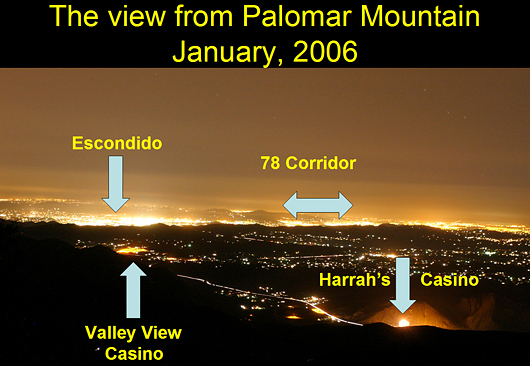
Light pollution is the bane of amateur astronomers everywhere. The Globe at Night program is an international citizen-science campaign to raise public awareness of the impact of light pollution by encouraging everyone everywhere to measure local levels of night sky brightness and contribute observations online to a world map. So here’s your opportunity to give them your help!

It’s pretty …

Read the rest of this article

AAVSO Alert Notice 434
Outburst of NSV 1436
March 30, 2011

The cataclysmic variable NSV 1436 has been discovered in outburst. This is the first bright outburst of this star observed since 1948, and followup observations are strongly encouraged. Little is known about the nature of NSV 1436, and observations may help shed light on whether the star is an …

Read the rest of this article

On March 29, 1807, German astronomer Heinrich Wilhelm Olbers spotted Vesta as a pinprick of light in the sky. Two hundred and four years later, as NASA’s Dawn spacecraft prepares to begin orbiting this intriguing world, scientists now know how special this world is, even if there has been some debate on how to classify it.

Many astronomers call Vesta …

Read the rest of this article

An award-winning NASA-produced television program, “NASA 360,” is available at the online video service hulu.com at: http://www.hulu.com/nasa-360

The site features four 30-minute episodes that show how composite materials are changing our world, how NASA has tested space technologies on Earth and what NASA researchers are doing to improve aviation. More programs will be added in the coming weeks.

“It’s awesome …

Read the rest of this article

AAVSO AAVSO Alert Notice 433
Request for observations of GW Lib in support of HST observations
March 20, 2011

Dr. Paula Szkody, University of Washington, has requested our help
in monitoring the cataclysmic variable GW Lib for upcoming Hubble Space Telescope observations, scheduled to be made during the week of 2011 April 7-11 UT. Dr. Szkody also observed this object with …

Read the rest of this article


NASA’s Cassini spacecraft chronicles the change of seasons as it captures clouds concentrated near the equator of Saturn’s largest moon, Titan. Image credit: NASA/JPL/SSI

As spring continues to unfold at Saturn, April showers on the planet’s largest moon, Titan, have brought methane rain to its equatorial deserts, as revealed in images captured by NASA’s Cassini spacecraft. This is the first …

Read the rest of this article

Comet Halley’s nucleus as seen by Giotto

Twenty-five years ago, ESA made its mark in deep space. A small spacecraft swept to within 600 km of Halley’s comet. The Giotto probe was nearly destroyed by the encounter but what it saw changed our picture of comets forever.

As debuts go, it doesn’t get any better than Giotto. The spacecraft was …

Read the rest of this article