 The annual Arietid meteor shower peaks on Sunday, June 7th. The Arietids are unusual because they are daytime meteors; they stream out of a point in the sky not far from the sun. Their radiant is in the constellation Aries, which lies just 30 degrees from the Sun at this time of year.
Arietid meteoroids hit Earth’s atmosphere with a velocity of 39 km/s (87,000 mph). No one is sure where these meteoroids come from. Possibilities include sungrazing asteroid 1566 Icarus, Comet 96P/Machholz, and the Kreutz family of sungrazing comets. The debris stream is quite broad: Earth is inside it from late May until early July. In most years, the shower peaks on June 7th or 8th.
The best time to look is just before dawn on Sunday morning (the Arietid radiant rises in the east about 45 minutes before the sun) when it may be possible to spot a small number of Arietids skimming the top of Earth’s atmosphere. Such “Earthgrazing” meteors tend to be long, colorful, and very pretty.
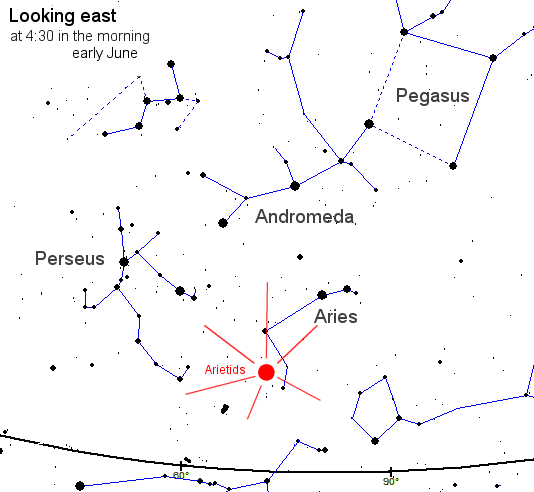
Looking East about 4:30am in the morning in early June.
After daybreak, when the meteors are no longer visible to the human eye, you can listen to radar echoes from the Arietids by tuning in to an online meteor radar at: http://spaceweatherradio.com
“The Arietids are the strongest daylight shower of the year,” notes Bob Lunsford of the American Meteor Society. “If you could see them through the sun’s glare, you would count as many as 60 per hour. Also, don’t forget that the daytime Zeta Perseids peak only two days later and are considered the second strongest daylight shower. In all my years of viewing I have never seen a Zeta Perseid, but I have seen a few Arietids. They have all been Earthgrazers and very impressive meteors.”
Filed under: Meteors & Meteorites




There were reports of a fireball from Oakland, Modesto, Fairfax and Cotati. The fireball was reported to be almost or as bright as the Full Moon and lasted up to 5 seconds.
You can find other reports of this fireball at the Fireball Sightings Log of the American Meteor Society.