NASA’s Cassini spacecraft has “sniffed” molecular oxygen ions around Saturn’s icy moon Dione for the first time, confirming the presence of a very tenuous atmosphere. The oxygen ions are quite sparse – one for every 0.67 cubic inches of space (one for every 11 cubic centimeters of space) or about 2,550 per cubic foot (90,000 per cubic meter) – show … Read the rest of this article
Fresh Air “Sniffed” by Cassini on Dione
March 7, 2012
Leave a comment
Enceladus and Saturn’s Rings
February 9, 2012
A crescent Enceladus appears with Saturn’s rings in this Cassini spacecraft view of the moon.
The famed jets of water ice emanating from the south polar region of the 504 km-diameter moon are faintly visible.
They appear as a small white blur below the dark pole, down and to the right of the illuminated part of the moon’s surface. The … Read the rest of this article
Cassini Mission Delivers Holiday Treats From Saturn
December 23, 2011
No team of reindeer, but radio signals flying clear across the solar system from NASA’s Cassini spacecraft have delivered a holiday package of glorious images. The pictures, from Cassini’s imaging team, show Saturn’s largest, most colorful ornament, Titan, and other icy baubles in orbit around this splendid planet.
Read the rest of this article
Titan and Dione: Saturn’s third-largest moon Dione can be seen through the …
Water Rains Onto Saturn From Enceladus
July 28, 2011
ESA’s Herschel space observatory has shown that water expelled from the moon Enceladus forms a giant torus of water vapour around Saturn. The discovery solves a 14-year mystery by identifying the source of the water in Saturn’s upper atmosphere.
Read the rest of this article
At least four distinct plumes of water ice spew out from the south polar region of Saturn’s moon Enceladus. Light reflected …
Cassini Sees Ocean-Like Spray on Enceladus
June 24, 2011
NASA’s Cassini spacecraft has discovered the best evidence yet for a large-scale saltwater reservoir beneath the icy crust of Saturn’s moon Enceladus. The data came from the spacecraft’s direct analysis of salt-rich ice grains close to the jets ejected from the moon.
Read the rest of this article
Dramatic plumes, both large and small, spray water ice out from many locations along the famed “tiger stripes” …
Violent Storm on Saturn
May 20, 2011
NASA’s Cassini spacecraft and a European Southern Observatory ground-based telescope tracked the growth of a giant early-spring storm in Saturn’s northern hemisphere that is so powerful it stretches around the entire planet. The rare storm has been wreaking havoc for months and shooting plumes of gas high into the planet’s atmosphere.
Read the rest of this article
Thermal infrared images of Saturn from the Very Large …
|
|
As spring continues to unfold at Saturn, April showers on the planet’s largest moon, Titan, have brought methane rain to its equatorial deserts, as revealed in images captured by NASA’s Cassini spacecraft. This is the first … Read the rest of this article
Cassini Sees Lightning on Saturn
April 4, 2010
April 14, 2010: NASA’s Cassini spacecraft has captured images of lightning on Saturn. The images have allowed scientists to create the first movie showing lightning flashing on another planet.
After waiting years for Saturn to dim enough for the spacecraft’s cameras to detect bursts of light, scientists were able to create the movie, complete with a soundtrack that features the … Read the rest of this article
Flash of Light From Titan
December 18, 2009
NASA’s Cassini spacecraft has photographed a flash of sunlight reflecting from a lake on Saturn’s moon Titan, confirming the presence of liquid hydrocarbons on a part of the moon dotted with many lake-shaped basins.
Cassini scientists had been looking for the glint, also known as a specular reflection, since the spacecraft began orbiting Saturn in 2004. But until recently Titan’s … Read the rest of this article
Saturn Moon Transits
February 19, 2009
Something is about to happen on Saturn that’s so pretty, even Hubble will pause to take a look.
“On Feb. 24th, there’s going to be a quadruple transit of Saturn’s moons,” says Keith Noll of the Hubble Space Telescope Science Institute. “Titan, Mimas, Dione and Enceladus will pass directly in front of Saturn and we’ll see their silhouettes crossing Saturn’s … Read the rest of this article


Free Affiliate Marketing Training


The Sun And Aurora Now
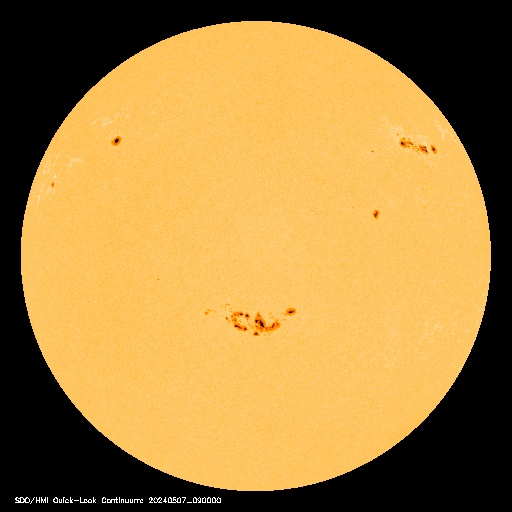
The Sun Now (Visible light)
|
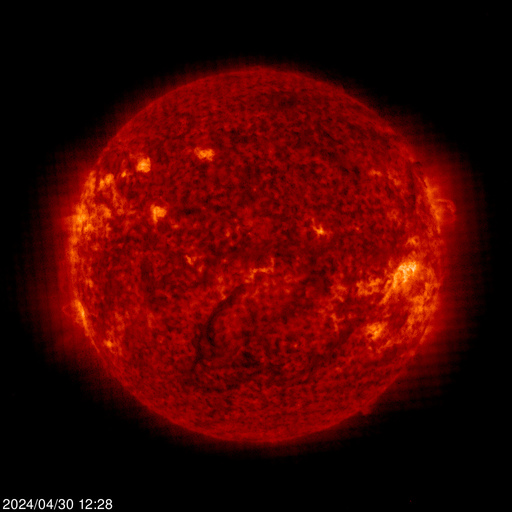
The Sun Now (H-Alpha light)
|
|
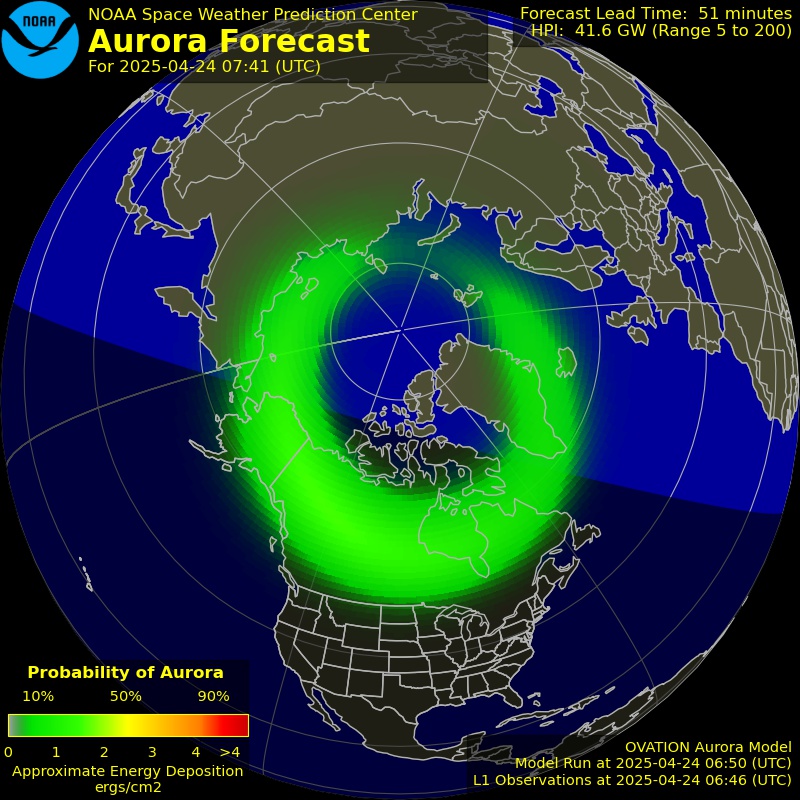
Aurora Oval
(Northern Hemisphere) |
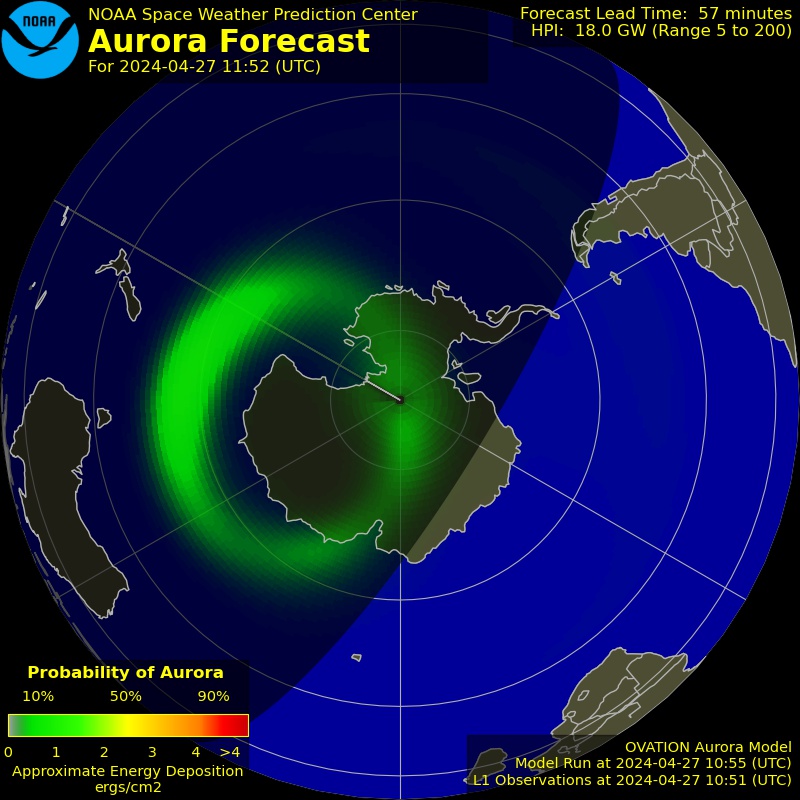
Aurora Oval
(Southern Hemisphere) |
|