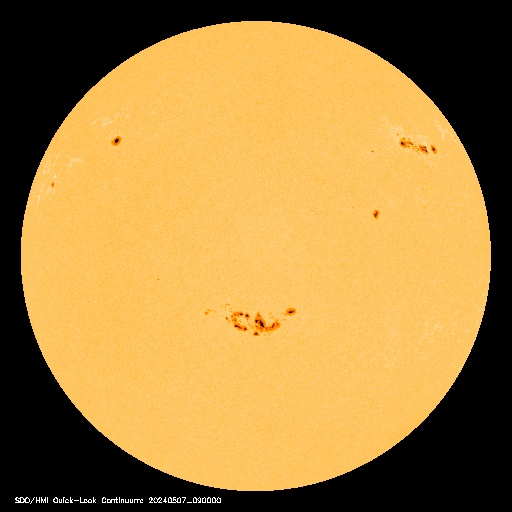
NASA’s Solar Dynamics Observatory has spotted one of the largest new sunspots to appear on the surface of the sun in years. It is nearly 25,000 miles wide, or more than three times larger than the Earth. The enormous sunspot was seen rotating over the sun’s northeastern limb on Nov. 3.

Any backyard astronomers with solar telescopes should be able to see the gigantic sunspot over the next few days.
The sunspot is actually a group of nearby darkened spots on the sun, some of which are individually wider than planet Earth.
Sunspots appear when intense magnetic activity ramps up on the sun, blocking the flow of heat through the process of convection, which causes areas of the sun’s surface to cool down. These isolated areas then appear dimmer than the surrounding area, creating a dark spot.
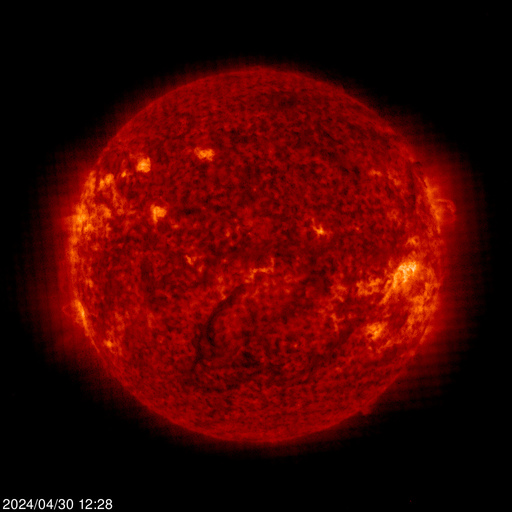
The intense magnetic activity around sunspots can often cause solar flares, which are large releases of energy that can actually brighten up the sun. Flares are also accompanied by flows of charged particles out into space, called coronal mass ejections, which can wreak havoc on satellites and power grids on Earth if they head our way.
SpaceWeather.com warns that a huge sunspot like AR1339 comes with a large potential for solar flares. The National Oceanic and Atmospheric Administration (NOAA) forecasts a 50 percent chance of medium-class M solar flares over the next 24 hours due to this sunspot.
NASA reported that the region has already experienced about eight solar flares, including an M-class flare, the second-largest type of solar flare, on Nov. 2. The agency also said that X-class flares are possible, even up to X10 or greater events, the largest possible solar flares.
Filed under: Astronomy News • The Sun