Comets visible to the naked eye are a rare delicacy in the celestial smorgasbord of objects in the nighttime sky. Scientists estimate that the opportunity to see one of these icy dirtballs advertising their cosmic presence so brilliantly they can be seen without the aid of a telescope or binoculars happens only once every five to 10 years. That said, …

Read the rest of this article
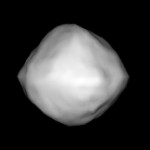
A newly discovered asteroid the size of a football field will cruise through Earth’s neighborhood this weekend (March 9th), just days after another space rock made an even closer approach to our planet.

The 330-foot-wide (100 meters) asteroid 2013 ET will miss Earth by 600,000 miles (960,000 kilometers) when it zips by on Saturday (March 9). The space rock flyby …

Read the rest of this article
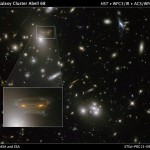
The universe is eerie enough without giving us an apparition of a 1980s video game alien attacker. This oddball-looking object is really a mirage created by the gravitational field of a foreground cluster of galaxies warping space and distorting the background images of more distant galaxies.


The gravitational field surrounding this massive cluster of galaxies, Abell 68, acts as a …

Read the rest of this article
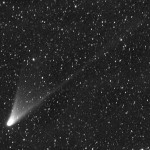
Comet Pan-STARRS (C/2011 L4) is now inside the orbit of Mercury and it is brightening as it approaches the sun. Observers in the southern hemisphere say the comet can be seen with the naked eye even through city lights. Currently, it is about as bright as the stars of the Big Dipper (Ursa Major) (magnitude +2 to +3). The comet …

Read the rest of this article
NASA’s Van Allen Probes mission has discovered a previously unknown third radiation belt around Earth, revealing the existence of unexpected structures and processes within these hazardous regions of space.


On Nov. 9, 2012, NASA renamed the Radiation Belt Storm Probes to the Van Allen Probes. The probes, shown here in an artist’s rendition, will help scientists study two giant belts …

Read the rest of this article