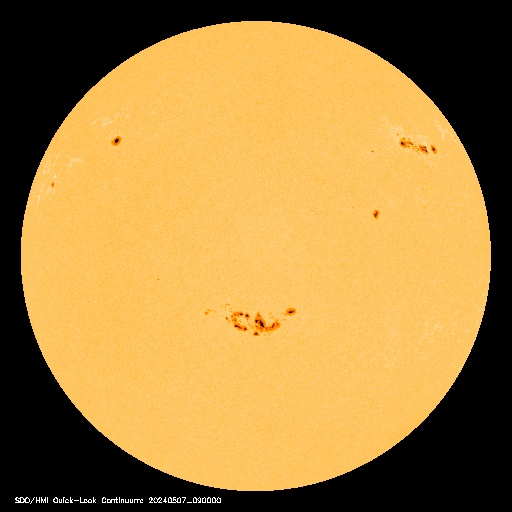
On April 16th around 17:45 UT, magnetic fields curling over the sun’s northeastern limb rose up and erupted, producing one of the most visually-spectacular explosions in years.

The event, which also produced an M1.7-class solar flare and a coronal mass ejection, was not Earth-directed. Nevertheless, it confirms suspicions that a significant active region is rotating onto the Earth-side of the …

Read the rest of this article
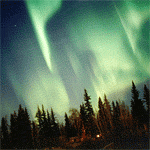
Big sunspot AR1429 has unleashed another major flare–an X5-class eruption on March 7th at 00:28 UT.

As a result of the blast, a radiation storm is underway and a CME will likely hit Earth’s magnetic field in a day or so.

Geomagnetic storms are already in progress at high latitudes due to earlier eruptions from the active sunspot. Last night, …

Read the rest of this article
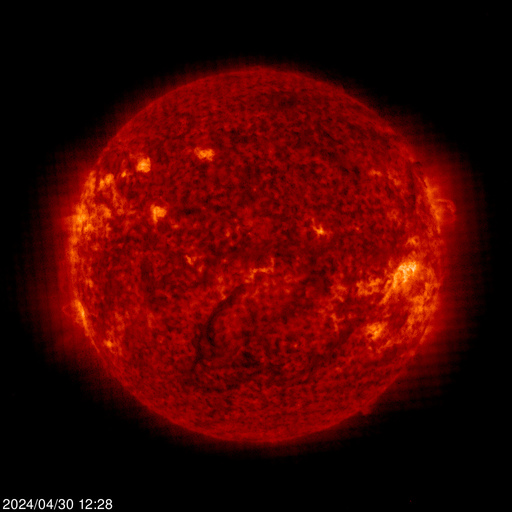
Big sunspot AR1429, which emerged over the weekend, is crackling with strong flares.

This morning the active region produced an X1-class eruption and a bright coronal mass ejection (CME). This is the strongest so far, occuring on March 5th at 0413 UT.

The CME appears set to deliver a glancing blow to Earth’s magnetic field in the days ahead, possibly …

Read the rest of this article
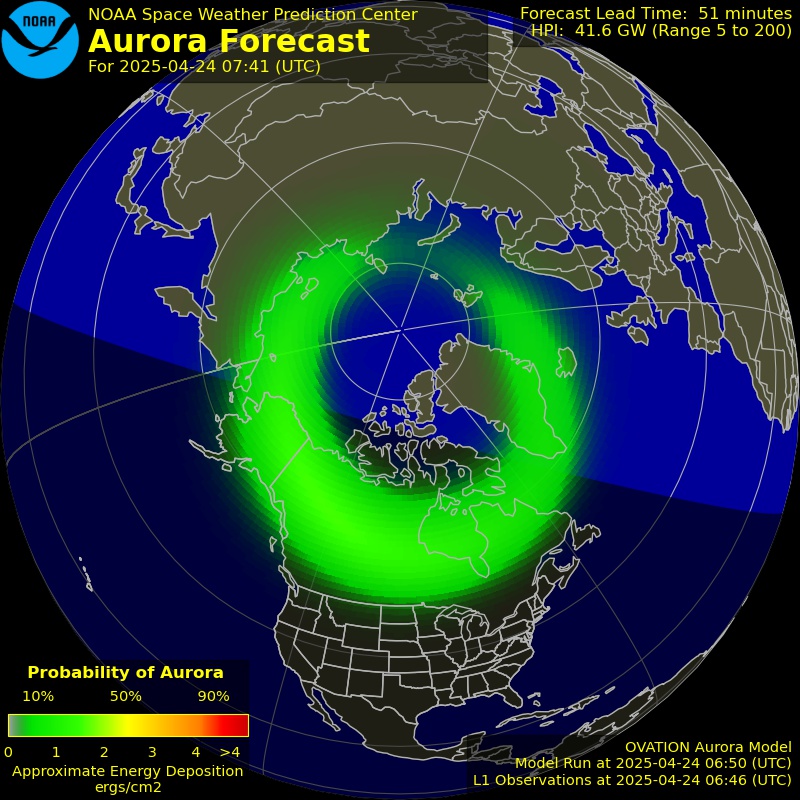
Earth’s magnetic field reverberated from a Coronal Mass Ejection (CME) impact during the early hours of Jan. 22nd. The hit compressed Earth’s magnetic field, briefly exposing some geosynchronous satellites to solar wind plasma, and disturbed the ionization structure of Earth’s upper atmosphere.

As night fell on Jan. 22nd, Arctic sky watchers reported bright auroras in response to a polar geomagnetic …

Read the rest of this article
Active sunspot 1401 erupted yesterday, Jan. 19th, for more than an hour around 16:00 UT.

The long-duration blast produced an M3-class solar flare and a Coronal Mass Ejection that appears to be heading toward Earth.

Forecasters say strong geomagnetic storms are possible when the cloud arrives during the late hours of Jan. 21st. High-latitude (and possibly middle-latitude) sky watchers should …

Read the rest of this article

A coronal mass ejection that swept past Mercury on Nov. 13th will likely hit Venus later today. Because Venus has no global magnetic field to protect it, the impact could erode material directly from the top of the planet’s atmosphere. It’s okay; Venus has atmosphere to spare. Analysts at the Goddard Space Weather Lab calculated the path of the CME, …

Read the rest of this article

On August 2nd, the sun hurled a cloud of plasma (Coronal Mass Ejection – CME) toward Earth when magnetic fields above sunspot 1261 erupted. Analysts expect the CME to arrive during the early hours of August 5th, possibly sparking geomagnetic storms around the poles.

This is not a big event; the eruption that propelled the cloud in our direction registered …

Read the rest of this article