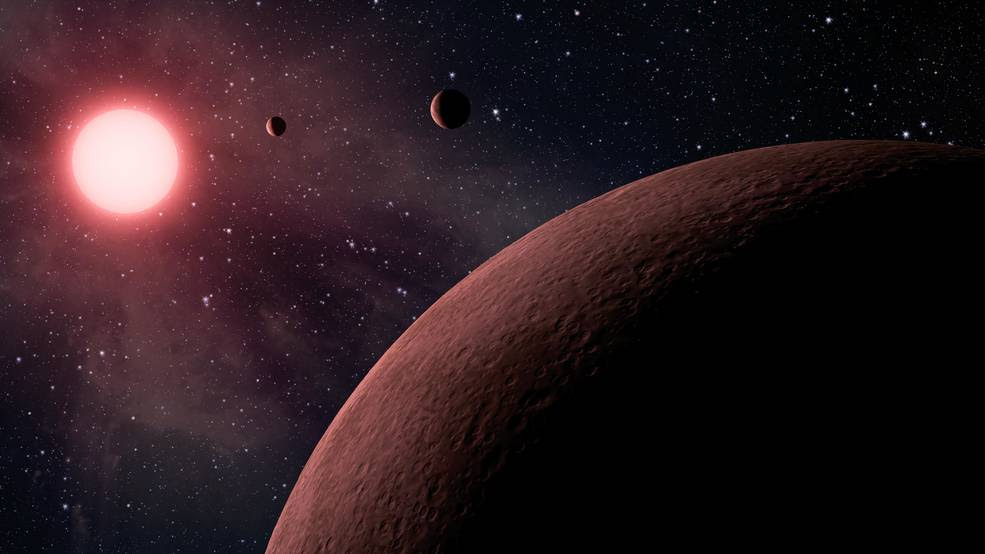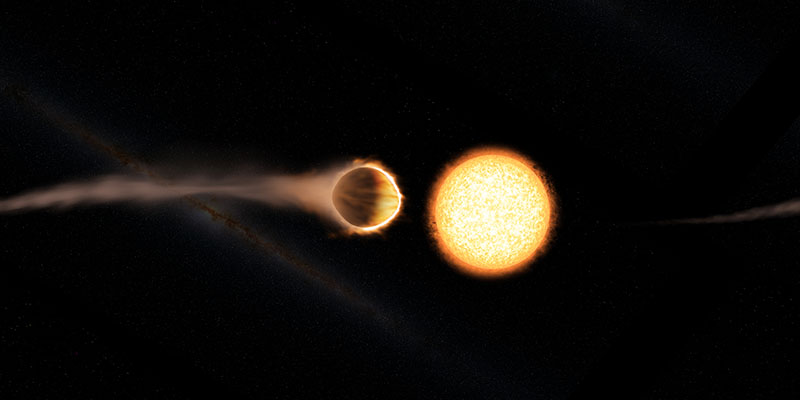
This artist's concept shows hot Jupiter WASP-121b

Scientists have discovered the strongest evidence to date for a stratosphere on a planet outside our solar system, or exoplanet. A stratosphere is a layer of atmosphere in which temperature increases with higher altitudes.

This result is exciting because it shows that a common trait of most of the atmospheres in our solar system — a warm stratosphere —

Read the rest of this article

The Topography of Ceres

Occator Crater on Ceres is home to the brightest area on the entire dwarf planet.

At 57 miles (92 kilometers) wide and 2.5 miles (4 kilometers) deep, Occator displays evidence of recent geologic activity.

NASA’s Dawn mission found that the bright spots may have been produced by upwelling of salt-rich liquids after the impact that formed the crater.

Pan and …

Read the rest of this article

Tonight's Sky

In August, the moons of Jupiter, the rings of Saturn, the Perseid meteor shower, a partial lunar eclipse and more will be visible.

“Tonight’s Sky” is produced by HubbleSite.org, online home of the Hubble Space Telescope. This is a recurring show, and you can find more episodes—and other astronomy videos—at http://hubblesite.org/videos/science

Read the rest of this article

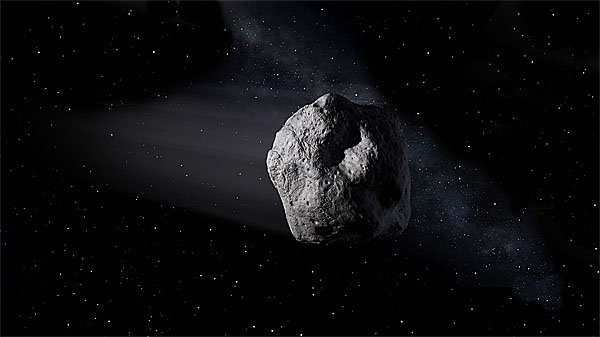
Asteroid Threat

NASA is hunting for Near-Earth Objects, while also working on ways to defend Earth against them.…

Read the rest of this article

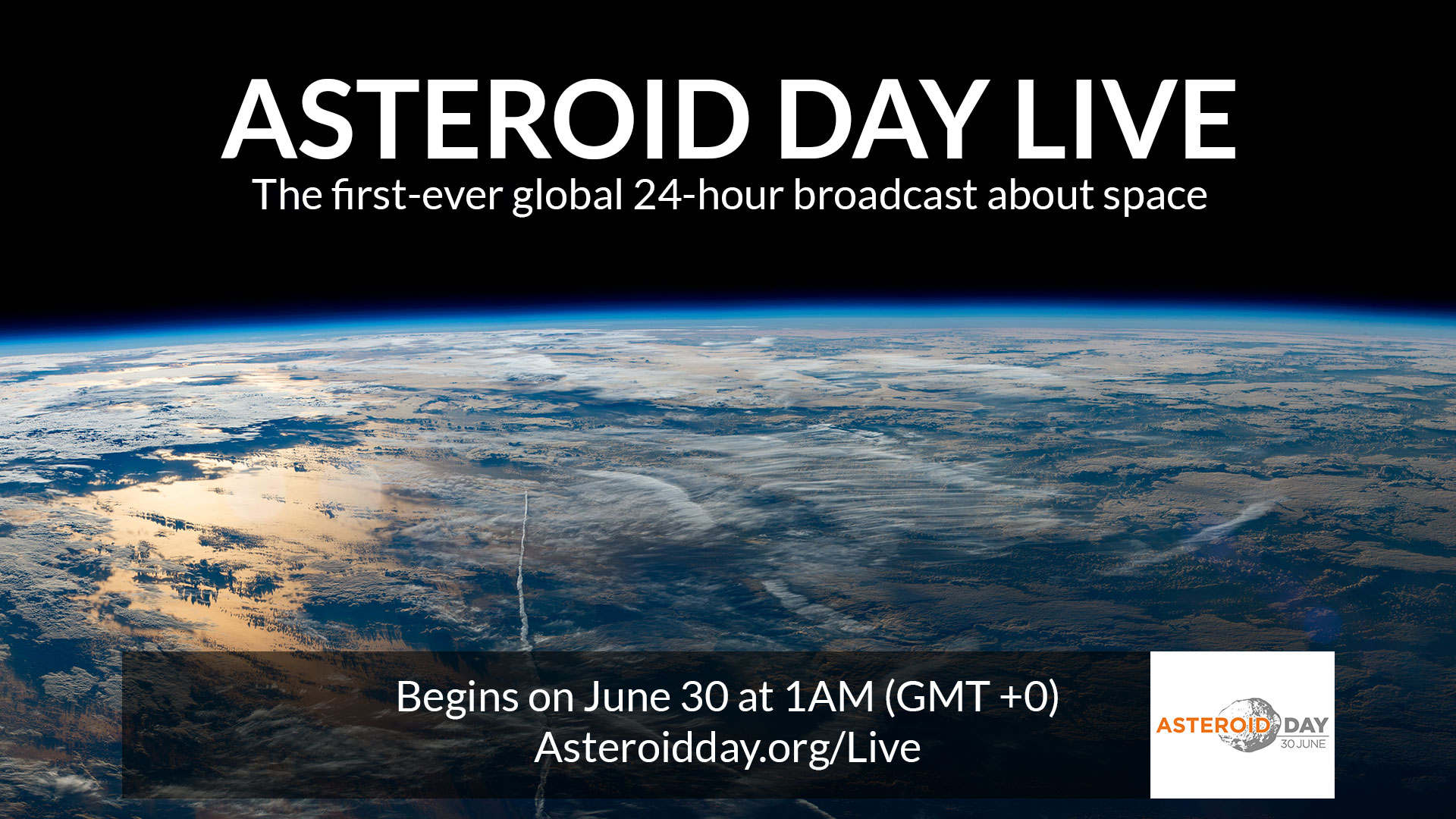
Asteroid Day Live

June 30 has been declared by the United Nations to be International Asteroid Day.

To celebrate the day, there will be a 24-hour global telethon with scientists, astronauts space agencies and even rock stars taking part.

The Asteroid Day Live Stream event will be broadcast worldwide from Luxembourg as well as online and will highlight the threat posed to our …

Read the rest of this article

Kepler Survey Catalog

NASA’s Kepler space telescope team has released a mission catalog of planet candidates that introduces 219 new planet candidates, 10 of which are near-Earth size and orbiting in their star’s habitable zone, which is the range of distance from a star where liquid water could pool on the surface of a rocky planet.

This is the most comprehensive and detailed …

Read the rest of this article

A Stormy Stellar Nursery

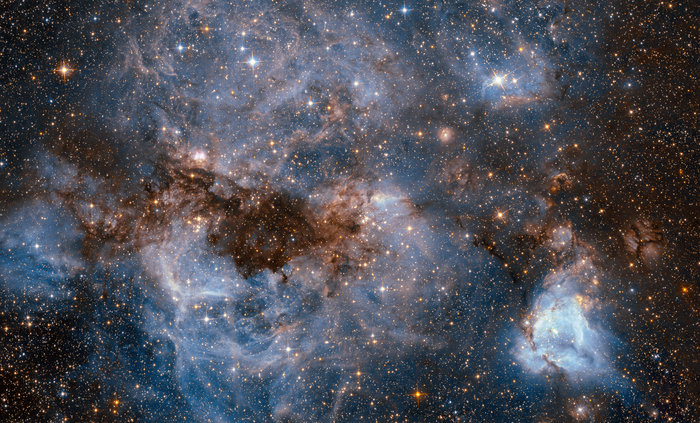
This shot from the NASA/ESA Hubble Space Telescope shows a maelstrom of glowing gas and dark dust within one of the Milky Way’s satellite galaxies, the Large Magellanic Cloud (LMC).

This stormy scene shows a stellar nursery known as N159, an HII region over 150 light-years across. N159 contains many hot young stars.

These stars are emitting intense ultraviolet light, …

Read the rest of this article

Expansion of the Universe

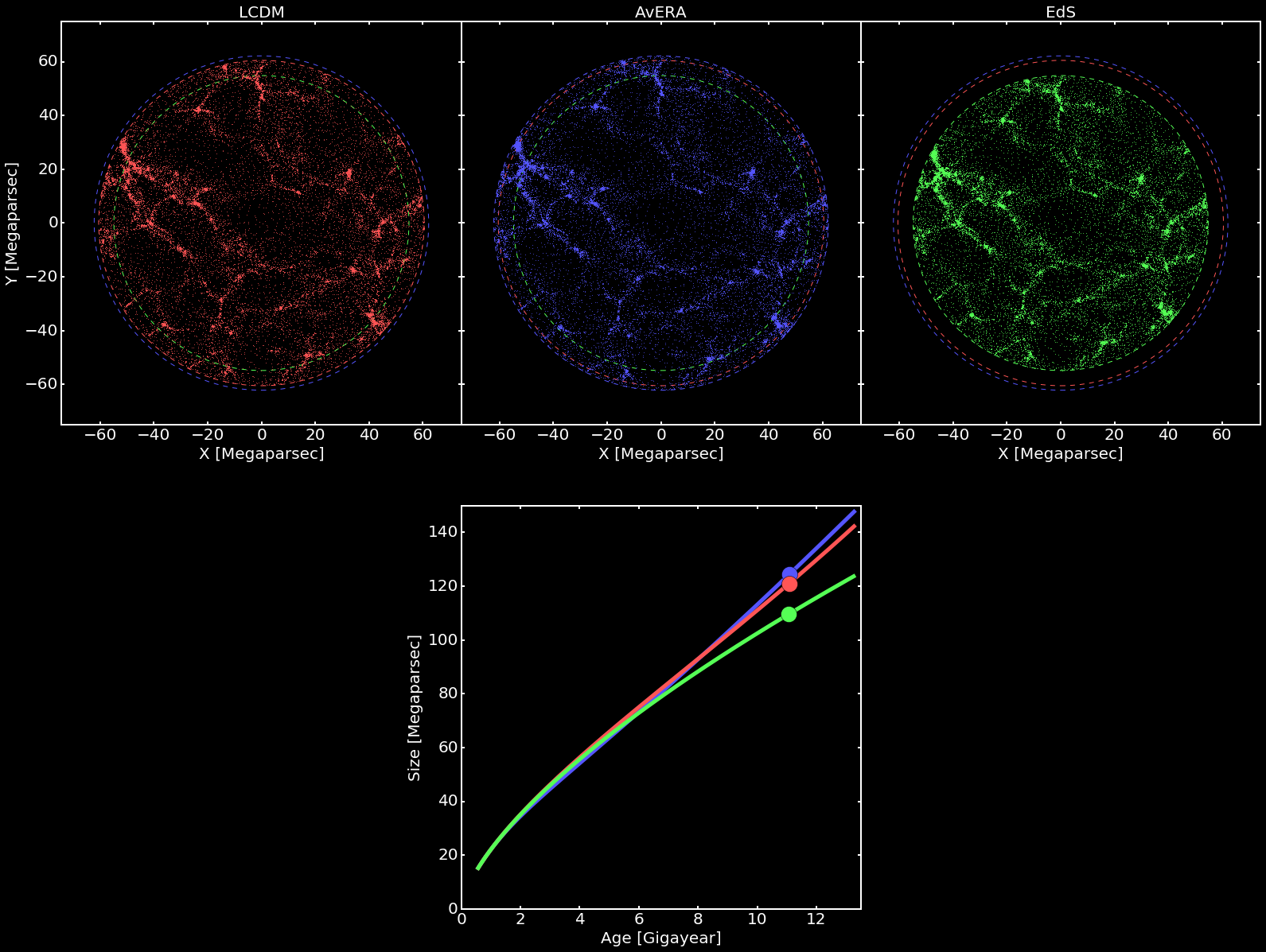
Enigmatic ‘dark energy‘, thought to make up 68% of the universe, may not exist at all, according to a Hungarian-American team. The researchers believe that standard models of the universe fail to take account of its changing structure, but that once this is done the need for dark energy disappears. The team publish their results in a paper …

Read the rest of this article

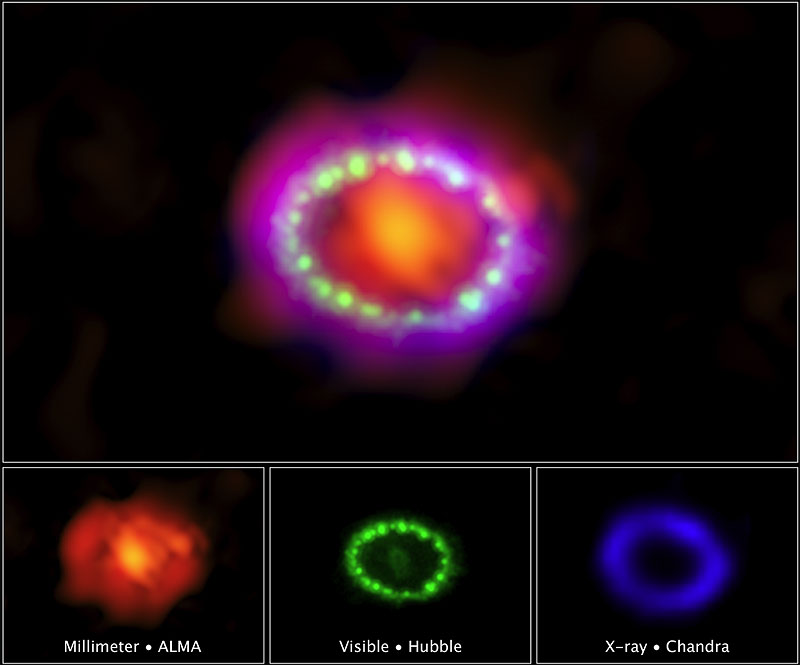
Three decades ago, astronomers spotted one of the brightest exploding stars in more than 400 years. The titanic supernova, called Supernova 1987A (SN 1987A), blazed with the power of 100 million suns for several months following its discovery on Feb. 23, 1987.


This is where Supernova 1987A is located

Since that first sighting, SN 1987A has continued to fascinate astronomers …

Read the rest of this article

Jovian Stormy Weather

NASA’s Juno mission to Jupiter, which has been in orbit around the gas giant since July 4, 2016, will remain in its current 53-day orbit for the remainder of the mission. This will allow Juno to accomplish its science goals, while avoiding the risk of a previously-planned engine firing that would have reduced the spacecraft’s orbital period to 14 days.…

Read the rest of this article