Asteroid Flyby of Earth
On Sunday, Sept. 7th, a house-sized asteroid named “2014 RC” will fly through the Earth-Moon system approximately 25,000 miles (40,000 km) from our planet. At closest approach (over New Zealand), the space rock will be almost inside the orbit of Earth’s geosynchronous satellites. Amateur astronomers, especially those in the southern hemisphere, may be able to observe the flyby.

This graphic (click for larger view) depicts the orbit of asteroid 2014 RC around the sun. Image Credit: NASA/JPL-Caltech
2014 RC poses no threat to either Earth itself or to orbiting spacecraft. A space rock around the same size blasted through the atmosphere over Chelyabinsk in Russia’s Ural Mountains in 2013, causing considerable damage and hundreds of injuries when it exploded.
Astronomers in Arizona detected 2014 RC on the night of Aug. 31 by the Catalina Sky Survey near Tucson, Arizona, and independently detected the next night by the Pan-STARRS 1 telescope on the summit of Haleakalā on Maui, Hawaii. Amateur astronomers will need a telescope to see Sunday’s flyby, but the Slooh virtual observatory will stream the encounter live online, starting at 10 p.m. ET Saturday.

This graphic (click for larger view) depicts the passage of asteroid 2014 RC past Earth on September 7, 2014. At time of closest approach, the space rock will be about one-tenth the distance from Earth to the moon. Times indicated on the graphic are Universal Time. Image Credit: NASA/JPL-Caltech
While 2014 RC will not impact Earth, its orbit will bring it back to our planet’s neighborhood in the future. The asteroid’s future motion will be closely monitored, but no future threatening Earth encounters have been identified.
A heliocentric view of the orbit of asteroid 2014 RC with respect to Earth and other planets.
Possible Aurora
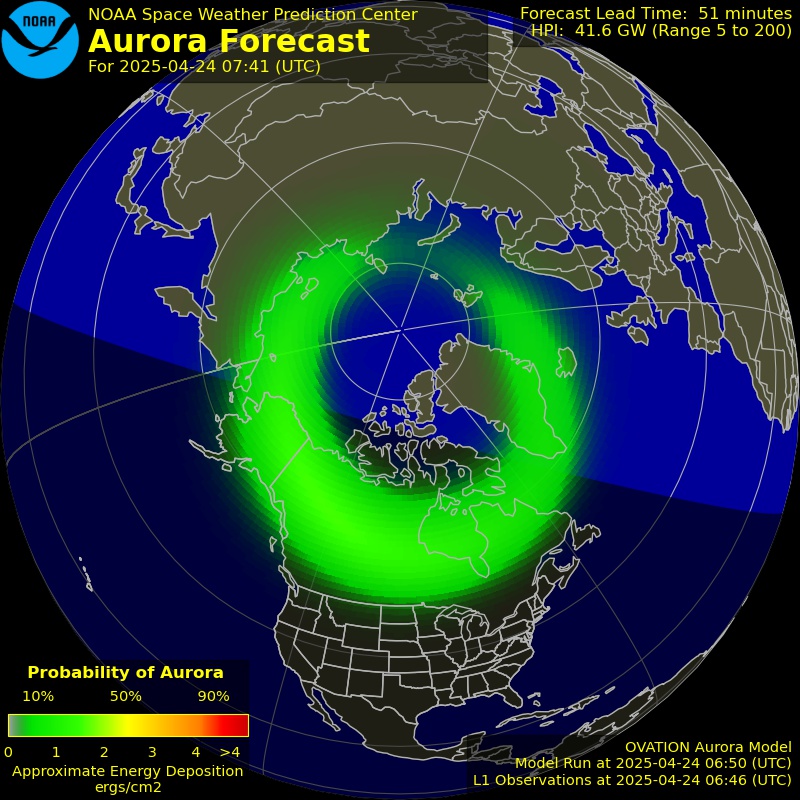
On Sept. 6th (Saturday), a day before the asteroid flyby, a Coronal Mass Ejection (CME) is expected to deliver a glancing blow to Earth’s magnetic field, setting the stage for a nice display of high-latitude auroras. The CME occurred on Sept. 2nd, after an enormous filament of dark plasma, which had been snaking across the face of the sun for days, became unstable and erupted.
Have something to add to this story? Share it in the comments.
Filed under: Asteroids & NEOs