Orionid Meteor Shower This Weekend
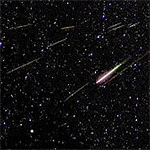
Today Earth is entering a stream of debris from Halley’s comet, source of the annual Orionid meteor shower. Forecasters expect the shower to peak on Saturday morning, Oct. 22nd, with more than 15 meteors per hour.
Although the moon doesn’t rise till after midnight, the Orionids usually wait until the early morning hours to pick up steam. And there will be a rather large waning crescent moon in the sky during this year’s Orionid meteor shower.
Despite the moonlight, meteor enthusiasts may want to give the Orionids a try. On a dark, moonless night, the Orionids exhibit a maximum of about 15 meteors per hour. These fast-moving meteors occasionally leave persistent trains and bright fireballs. If you trace these meteors backward, they seem to come from the Club of the famous constellation Orion the Hunter.The radiant is north of Betelgeuse.
The Orionids have a broad and irregular peak that isn’t easy to predict. More meteors tend to fly after midnight.