Mars

Scientists may be closer to solving the mystery of how Mars changed from a world with surface water billions of years ago to the arid Red Planet of today.

A new analysis of the largest known deposit of carbonate minerals on Mars suggests that the original Martian atmosphere may have already lost most of its carbon dioxide by the era …

Read the rest of this article

Earth Day 2015

The next time you step onto an airplane, consider the following: In any given year, the pilot of your aircraft probably absorbs as much radiation as a worker in a nuclear power plant.

And you are about to follow him wherever he goes.

The FAA classifies pilots as “occupational radiation workers.” Flying high above Earth with little atmosphere to protect …

Read the rest of this article
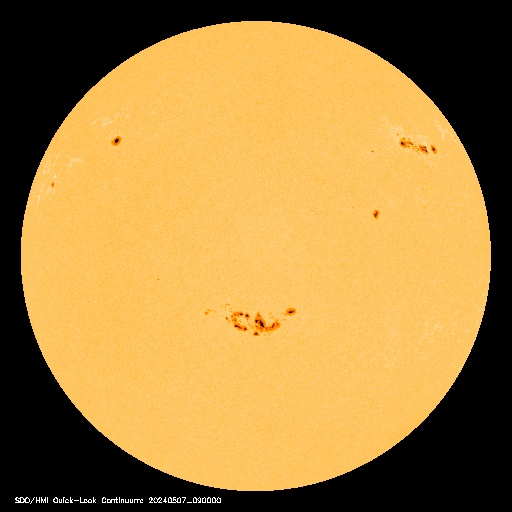
Every summer, something strange and wonderful happens high above the north pole. Ice crystals begin to cling to the smoky remains of meteors, forming electric-blue clouds with tendrils that ripple hypnotically against the sunset sky. Noctilucent clouds—a.k.a. “NLCs”–are a delight for high-latitude sky watchers, and around the Arctic Circle their season of visibility is always eagerly anticipated.

News flash: This …

Read the rest of this article
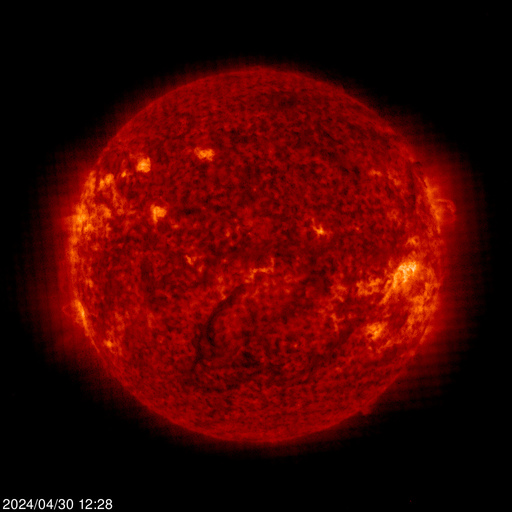
Comets visible to the naked eye are a rare delicacy in the celestial smorgasbord of objects in the nighttime sky. Scientists estimate that the opportunity to see one of these icy dirtballs advertising their cosmic presence so brilliantly they can be seen without the aid of a telescope or binoculars happens only once every five to 10 years. That said, …

Read the rest of this article
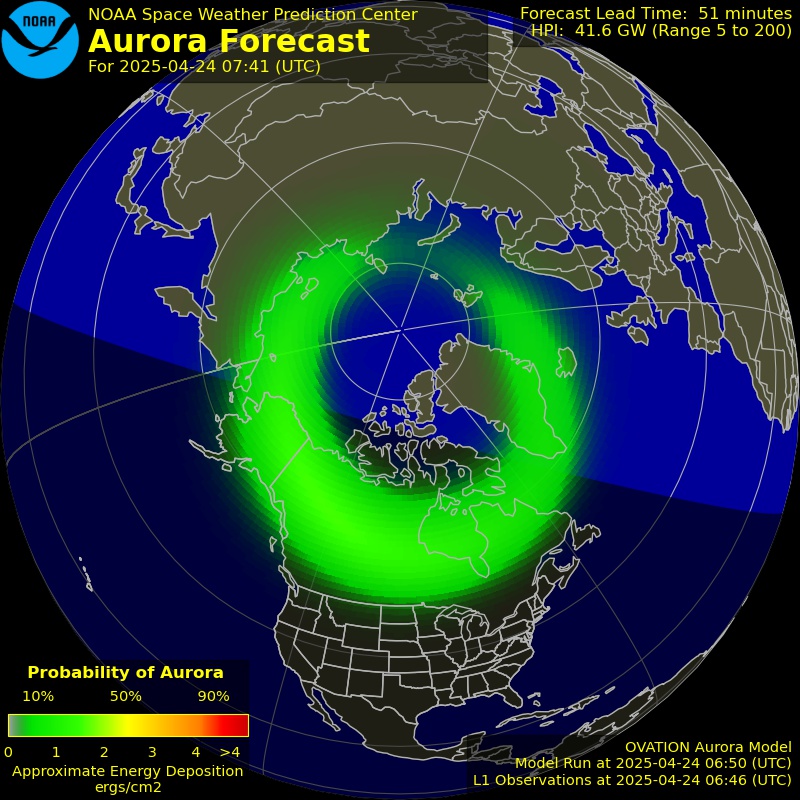
Comet Pan-STARRS (C/2011 L4) is now inside the orbit of Mercury and it is brightening as it approaches the sun. Observers in the southern hemisphere say the comet can be seen with the naked eye even through city lights. Currently, it is about as bright as the stars of the Big Dipper (Ursa Major) (magnitude +2 to +3). The comet …

Read the rest of this article
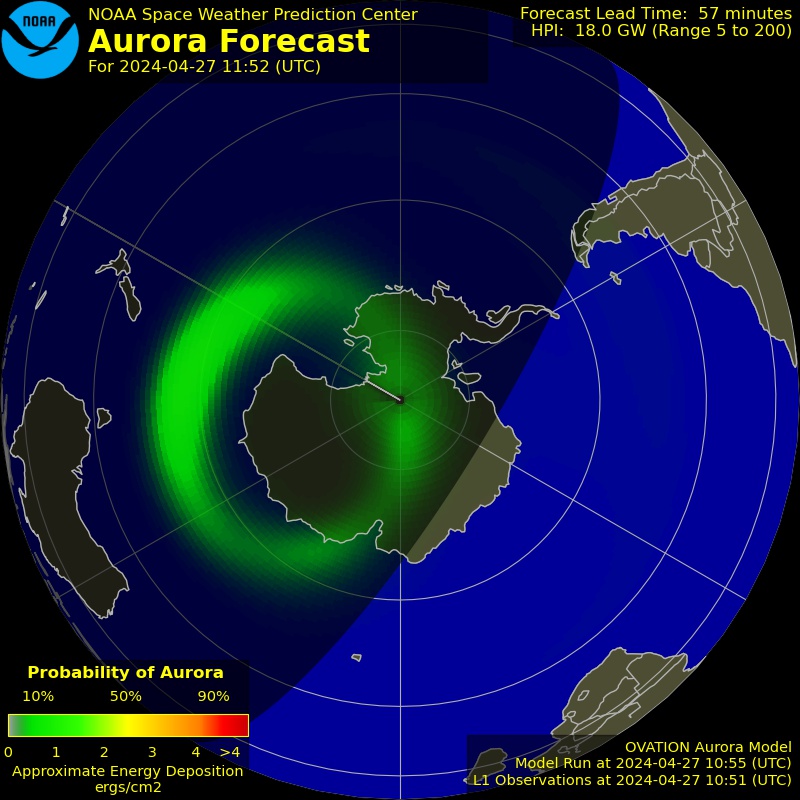
The annual Quadrantid meteor shower peaks on Wednesday morning, Jan. 4th, when Earth passes through a narrow stream of debris from a comet thought to have broken apart some 500 years ago.

The shower is expected to be strong (as many as 100 meteors per hour), but elusive, with a peak that lasts no longer than a couple of hours. …

Read the rest of this article

May 30: Tiny crystals of a green mineral called olivine are falling down like rain on a burgeoning star, according to observations from NASA’s Spitzer Space Telescope.

May 30: NASA has ended operational planning activities for the Mars rover Spirit and transitioned the Mars Exploration Rover Project to a single-rover operation focused on Spirit’s still-active twin, Opportunity.

Read the rest of this article

NASA’s Cassini spacecraft and a European Southern Observatory ground-based telescope tracked the growth of a giant early-spring storm in Saturn’s northern hemisphere that is so powerful it stretches around the entire planet. The rare storm has been wreaking havoc for months and shooting plumes of gas high into the planet’s atmosphere.


Thermal infrared images of Saturn from the Very Large …

Read the rest of this article

During the early hours of August 1st, NASA’s Solar Dynamics Observatory recorded a complex global disturbance on the Earth-facing side of the sun.

Most of the sun’s northern hemisphere was involved in the event, which included a long-duration C3-class solar flare, a “solar tsunami, ” and a massive filament eruption.

As a result of these blasts, a coronal mass …

Read the rest of this article

Lonely Pluto floats in the darkness at the edge of our solar system. It’s so far away even the Hubble Space Telescope has trouble making out the details. Nevertheless, Pluto is so interesting, even fuzzy images of the dwarf planet are compelling.

A team of researchers led by Marc Buie of the Southwest Research Institute recently released the best Hubble …

Read the rest of this article