For the first time, astronomers have clearly seen the effects of “dark energy” on the most massive collapsed objects in the universe using NASA’s Chandra X-ray Observatory. By tracking how dark energy has stifled the growth of galaxy clusters and combining this with previous studies, scientists have obtained the best clues yet about what dark energy is and what the … Read the rest of this article
NASA Top Science Exploration and Discovery Stories of 2008
December 15, 2008
NASA landed on Mars, photographed distant worlds, added to the International Space Station, took part in a lunar science mission with India and made major progress toward returning astronauts to the moon as the agency celebrated its 50th birthday in 2008. Here on Earth, NASA researchers recorded the continued decline of Arctic sea ice, won awards for aviation breakthroughs, discovered … Read the rest of this article
Colorado Super Bolide
December 11, 2008
On Dec. 6th, 2008 at 1:06 a.m. MST, a meteor of stunning brightness lit up the skies over Colorado, USA. Astronomer Chris Peterson photographed the event using a dedicated all-sky meteor camera in the town of Guffey, near Colorado Springs:
“In seven years of operation, this is the brightest fireball I’ve ever recorded,” says Peterson. “I estimate the terminal explosion … Read the rest of this article
Hubble Space Telescope Finds Carbon Dioxide on Extrasolar Planet
December 10, 2008
NASA’s Hubble Space Telescope has discovered carbon dioxide in the atmosphere of a planet orbiting another star. This breakthrough is an important step toward finding chemical biotracers of extraterrestrial life.
The Jupiter-sized planet, called HD 189733b, is too hot for life. But the Hubble observations are a proof-of-concept demonstration that the basic chemistry for life can be measured on planets … Read the rest of this article
AAVSO Alert Notice 392: Supernova 2008hy in IC 334
December 8, 2008
 AAVSO Alert Notice 392:
Supernova 2008hy in IC 334
December 8, 2008
Further to CBETs #1608 (Puckett and Langoussis; Daniel W.E. Green, editor) and #1610 (Dennefeld et al., and Yamanaka et al.) the supernova SN 2008hy has been identified as a Type Ia supernova, and is believed to be near maximum light (V=14.3 on 2008 Dec 07.13, JD 2454807.63; T. … Read the rest of this article
December 2008 Planetary Conjunction
December 3, 2008
When the sun goes down tonight, step outside and look south. Beaming through the twilight is one of the prettiest things you’ll ever see – a tight three-way conjunction of Venus, Jupiter and the crescent Moon. The event is visible from all parts of the world, even from light-polluted cities.
People in New York and Hong Kong will … Read the rest of this article


Free Affiliate Marketing Training



The Sun And Aurora Now
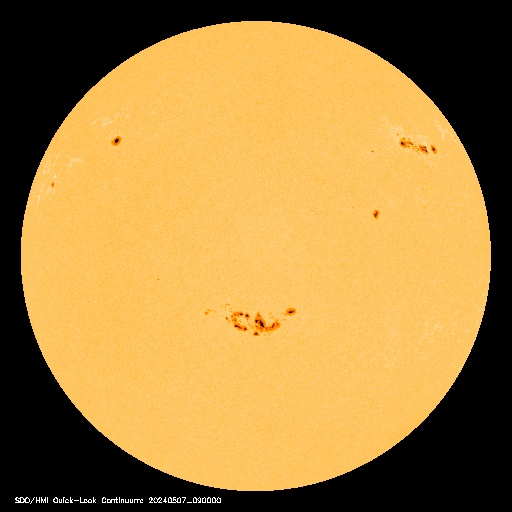
The Sun Now (Visible light)
|
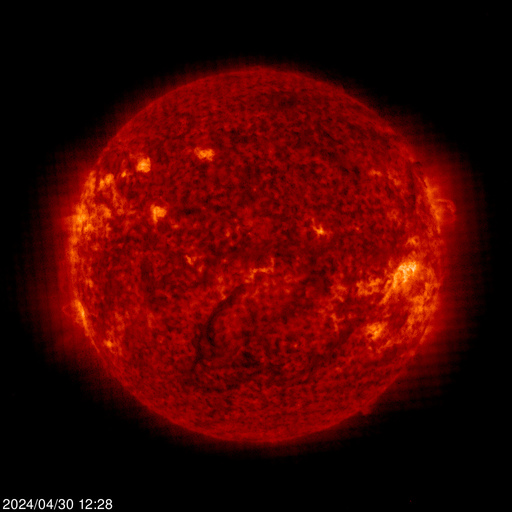
The Sun Now (H-Alpha light)
|
|
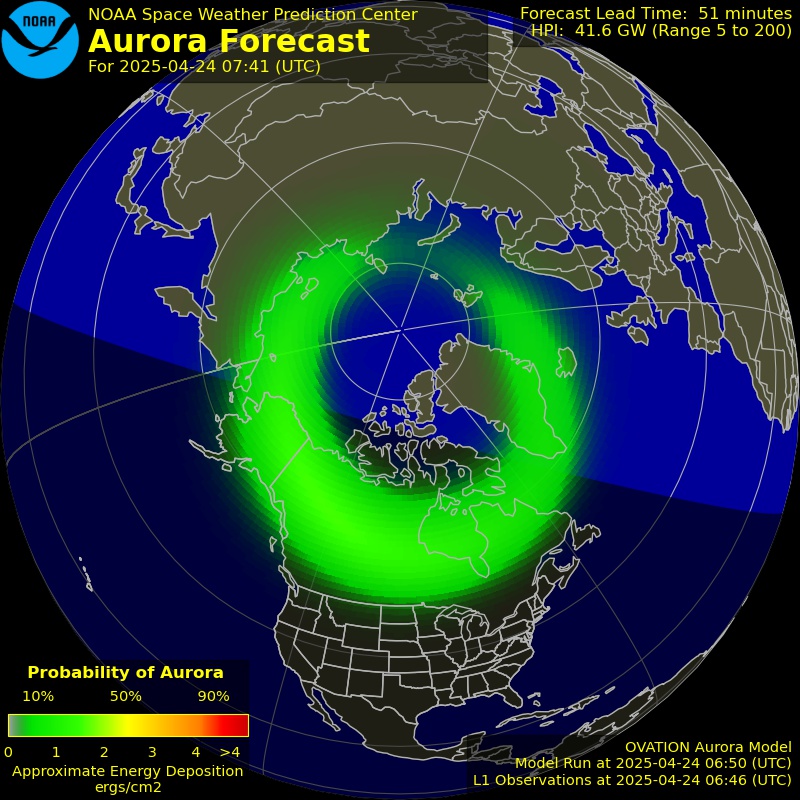
Aurora Oval
(Northern Hemisphere) |
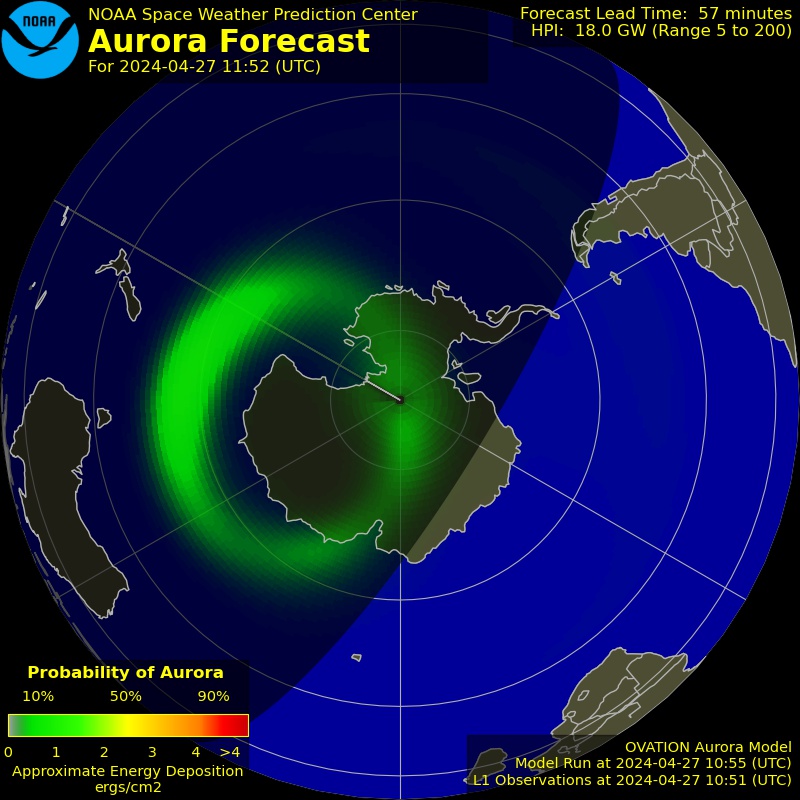
Aurora Oval
(Southern Hemisphere) |
|