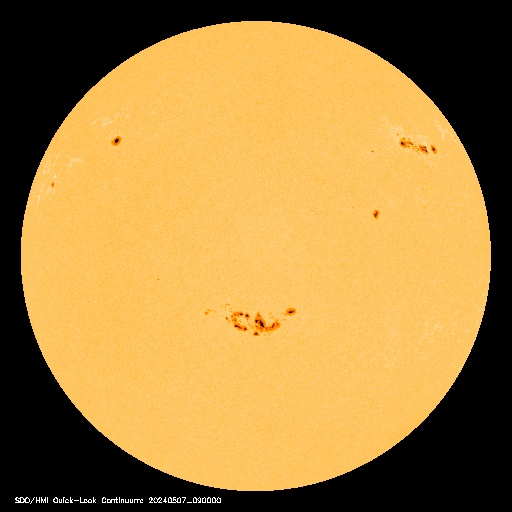
The Sun

Huge sunspot AR1476 is crackling with M-class solar flares and appears to be on the verge of producing something even stronger.

The sunspot’s ‘beta-gamma-delta’ magnetic field harbors energy for X-class flares, the most powerful kind.

Radio operators are recording strong bursts of shortwave static from the sunspot as it turns toward Earth. Visit http://spaceweather.com for sample recordings and forecasts.

Solar …

Read the rest of this article

Last month, when the sun unleashed the most intense radiation storm since 2003, peppering satellites with charged particles and igniting strong auroras around both poles, a group of high school students in Bishop, California, knew just what to do. They launched a rubber chicken.

Camilla at ~124,800 feet on March 3, 2012.

The students inflated a helium balloon and used …

Read the rest of this article

On April 16th around 17:45 UT, magnetic fields curling over the sun’s northeastern limb rose up and erupted, producing one of the most visually-spectacular explosions in years.

The event, which also produced an M1.7-class solar flare and a coronal mass ejection, was not Earth-directed. Nevertheless, it confirms suspicions that a significant active region is rotating onto the Earth-side of the …

Read the rest of this article

Sunspot AR1429 unleashed another strong flare (category M7.9) on March 13th. The explosion produced a significant coronal mass ejection (CME), which forecasters say should reach Earth today, March 15th, at 06:20 UT (+/- 7 hours), possibly triggering minor to moderate geomagnetic storms.

A bright comet related to sungrazing Comet Lovejoy dove towards the sun earlier this week. The orbiting Solar …

Read the rest of this article
As Earth’s magnetic field reverberates from the impact of one Coronal Mass Ejection (CME) on March 8th, a second CME is on the way.

Big sunspot AR1429 unleashed an M6-class solar flare yesterday (March 9th), and the eruption hurled a cloud of plasma almost directly toward Earth.

Forecasters say the CME could reach our planet during the late hours of …

Read the rest of this article
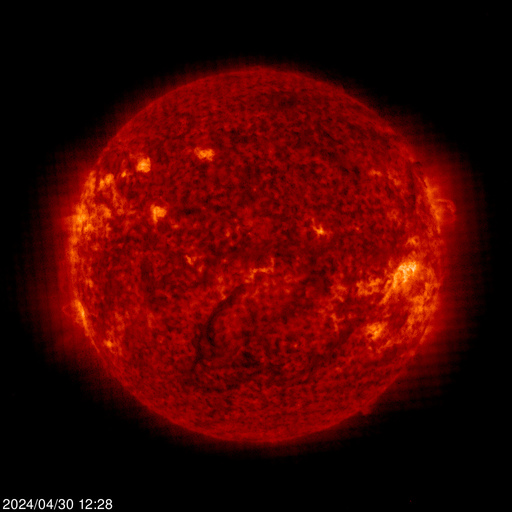
Big sunspot AR1429 has unleashed another major flare–an X5-class eruption on March 7th at 00:28 UT.

As a result of the blast, a radiation storm is underway and a CME will likely hit Earth’s magnetic field in a day or so.

Geomagnetic storms are already in progress at high latitudes due to earlier eruptions from the active sunspot. Last night, …

Read the rest of this article
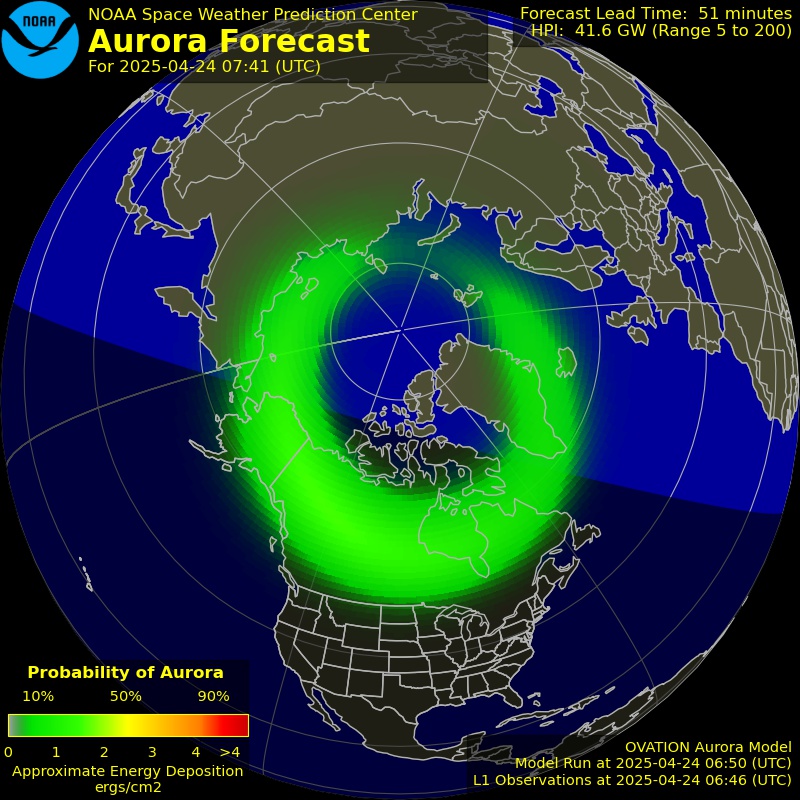
Earth’s magnetic field reverberated from a Coronal Mass Ejection (CME) impact during the early hours of Jan. 22nd. The hit compressed Earth’s magnetic field, briefly exposing some geosynchronous satellites to solar wind plasma, and disturbed the ionization structure of Earth’s upper atmosphere.

As night fell on Jan. 22nd, Arctic sky watchers reported bright auroras in response to a polar geomagnetic …

Read the rest of this article
Active sunspot 1401 erupted yesterday, Jan. 19th, for more than an hour around 16:00 UT.

The long-duration blast produced an M3-class solar flare and a Coronal Mass Ejection that appears to be heading toward Earth.

Forecasters say strong geomagnetic storms are possible when the cloud arrives during the late hours of Jan. 21st. High-latitude (and possibly middle-latitude) sky watchers should …

Read the rest of this article

A new video from NASA’s Solar Dynamics Observatory shows huge blasts of plasma, called solar prominences, curling around the sun’s tumultuous magnetic field. The remarkable activity was captured Nov. 14 to 15 using a wavelength of extreme ultraviolet light. Never look at the Sun directly yourself – it can lead to blindness!


The Camtasia Studio video content presented here requires …

Read the rest of this article

NASA’s Solar Dynamics Observatory has spotted one of the largest new sunspots to appear on the surface of the sun in years. It is nearly 25,000 miles wide, or more than three times larger than the Earth. The enormous sunspot was seen rotating over the sun’s northeastern limb on Nov. 3.

Any backyard astronomers with solar telescopes should be able …

Read the rest of this article