Astronomers using data from NASA’s Hubble Telescope have observed what appears to be a clump of dark matter left behind from a wreck between massive clusters of galaxies. The result could challenge current theories about dark matter that predict galaxies should be anchored to the invisible substance even during the shock of a collision.


This composite image shows the distribution …

Read the rest of this article

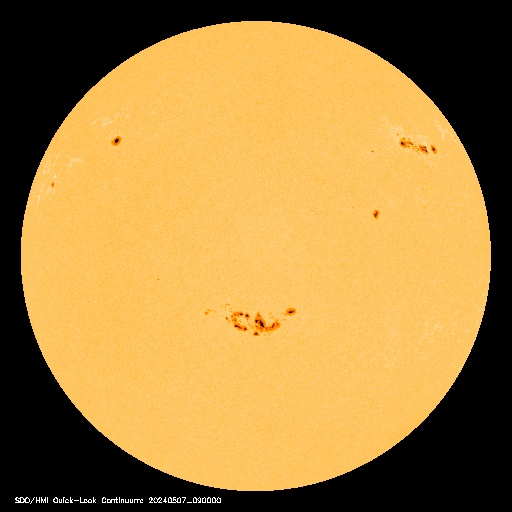
Big sunspot AR1429, which emerged over the weekend, is crackling with strong flares.

This morning the active region produced an X1-class eruption and a bright coronal mass ejection (CME). This is the strongest so far, occuring on March 5th at 0413 UT.

The CME appears set to deliver a glancing blow to Earth’s magnetic field in the days ahead, possibly …

Read the rest of this article

On Feb. 29, NASA successfully conducted another drop test of the Orion crew vehicle’s entry, descent and landing parachutes high above the Arizona desert in preparation for the vehicle’s orbital flight test in 2014. Orion will carry astronauts deeper into space than ever before, provide emergency abort capability, sustain the crew during space travel and ensure a safe re-entry and …

Read the rest of this article

New images from NASA’s Lunar Reconnaissance Orbiter (LRO) spacecraft show the moon’s crust is being stretched, forming minute valleys in a few small areas on the lunar surface. Scientists propose this geologic activity occurred less than 50 million years ago, which is considered recent compared to the moon’s age of more than 4.5 billion years.

A team of researchers analyzing …

Read the rest of this article

ESA’s Venus Express spacecraft has discovered that our cloud-covered neighbour spins a little slower than previously measured. Peering through the dense atmosphere in the infrared, the orbiter found surface features were not quite where they should be.


Venus Express in orbit since 2006 around our nearest planetary neighbour. Credits: ESA

Using the VIRTIS instrument at infrared wavelengths to penetrate the …

Read the rest of this article

New images from ESA’s Mars Express show the Syrtis Major region on Mars. Once thought to be a sea of water, the region is now known to be a volcanic province dating back billions of years.


Syrtis Major, discovered in 1659 by Christaan Huygens, is a volcanic province on Mars. The image is centred on approximately 16°N/73°E. The High-Resolution Stereo …

Read the rest of this article

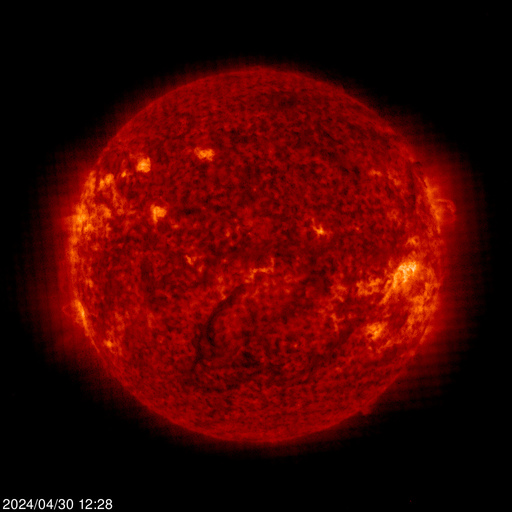
Active sunspot 1401 erupted yesterday, Jan. 19th, for more than an hour around 16:00 UT.

The long-duration blast produced an M3-class solar flare and a Coronal Mass Ejection that appears to be heading toward Earth.

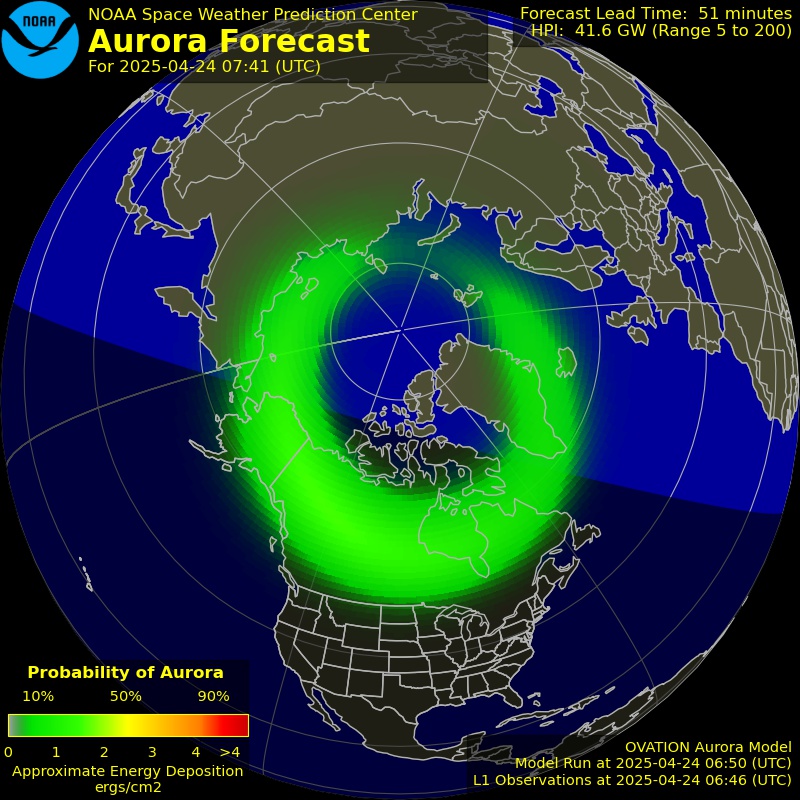
Forecasters say strong geomagnetic storms are possible when the cloud arrives during the late hours of Jan. 21st. High-latitude (and possibly middle-latitude) sky watchers should …

Read the rest of this article

NASA’s Kepler mission has discovered the first Earth-size planets orbiting a sun-like star outside our solar system. The planets, called Kepler-20e and Kepler-20f, are too close to their star to be in the so-called habitable zone where liquid water could exist on a planet’s surface, but they are the smallest exoplanets ever confirmed around a star like our sun.


This …

Read the rest of this article

NASA’s New Horizons mission reached a special milestone yesterday, Dec. 2, 2011, on its way to reconnoiter the Pluto system, coming closer to Pluto than any other spacecraft.

It’s taken New Horizons 2,143 days of high-speed flight – covering more than a million kilometers per day for nearly six years—to break the closest-approach mark of 1.58 billion kilometers set by …

Read the rest of this article

After eight years of planning, more than $600 million in cost overruns, and a two-year delay, NASA’s Mars Science Laboratory is finally ready to launch.

Now you can watch the nuclear-powered, 1-ton rover — currently the largest machine that can feasibly land on the Red Planet — take off from Cape Canaveral and begin its journey to Mars.…

Read the rest of this article