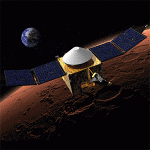
After 10-month voyage across more than 400 million miles of empty space, NASA’s MAVEN spacecraft reached Mars on Sept. 21st 2014. Less than 8 hours later, the data started to flow.

Our Imaging Ultraviolet Spectrograph (IUVS) obtained these false-color images of Mars on Sept. 22nd,” says Nick Schneider who leads the instrument team at the University of Colorado. …

Read the rest of this article

The Sun

ESA’s Sun-watching Proba-2 satellite has been in orbit since November 2009, demonstrating a range of technologies and serving as a platform for scientific observations.

The 130-kg satellite carries two solar monitors. One is SWAP (Sun Watcher using Active Pixel System detector and Image Processing), a small telescope that captures the solar corona at wavelengths corresponding to temperatures of about a …

Read the rest of this article


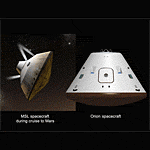
This set of artist’s concepts shows NASA’s Mars Science Laboratory cruise capsule and NASA’s Orion spacecraft, which is being built now at NASA’s Johnson Space Center and will one day send astronauts to Mars. The rover Curiosity is tucked inside of the Mars Science Laboratory cruise vehicle like human beings would be tucked inside Orion. Image credit: NASA/JPL-Caltech/JSC

Measurements taken …

Read the rest of this article

The Sun

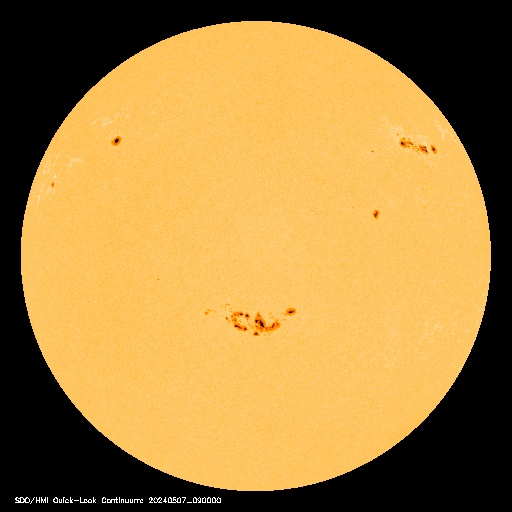
During a 24 hour period straddling May 13th and 14th, the sun unleashed three X-class solar flares. These are the strongest flares of the year so far, and they signal a significant increase in solar activity. The source of the flares, a large sunspot on the sun’s eastern limb, appears poised to erupt again as it turns toward Earth.

NOAA …

Read the rest of this article

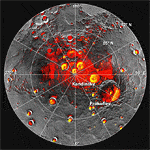
NASA has recently discovered a very strange planet. Its days are twice as long as its years. It has a tail like a comet. It is hot enough to melt lead, yet capped by deposits of ice. And to top it all off … it appears to be pink.

The planet is Mercury.

Of course, astronomers have known about Mercury …

Read the rest of this article
NASA’s newest Mars mission, landing in two days, will draw on support from missions sent to Mars years ago and will contribute to missions envisioned for future decades.


This graphic shows the locations of the cameras on NASA’s Curiosity rover. The rover’s mast features seven cameras: the Remote Micro Imager, part of the Chemistry and Camera suite; four black-and-white Navigation …

Read the rest of this article
The Sun

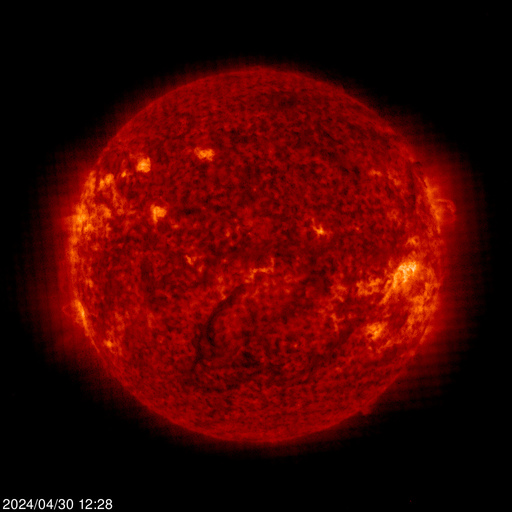
New sunspot AR1532 is crackling with M-class solar flares, including a brief but intense M6-flare on July 28th. A coronal mass ejection (CME) produced by Saturday’s M6-class flare is heading toward Earth. According to analysts at the Goddard Space Weather Lab, the cloud could deliver a glancing blow to our planet’s magnetic field on July 31st around 1500 UT (+/- …

Read the rest of this article
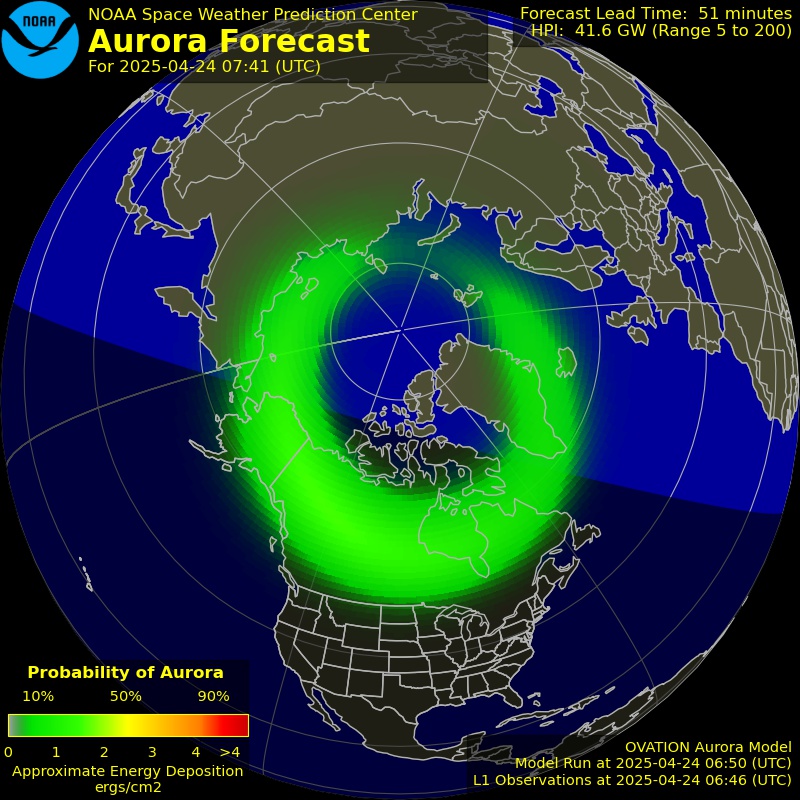
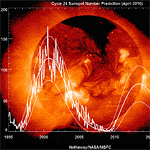
Forecasters say Solar Max is due in the year 2013. When it arrives, the peak of 11-year sunspot cycle will bring more solar flares, more coronal mass ejections, more geomagnetic storms and more auroras than we have experienced in quite some time.


Solar maximum is still a year away. This month sky watchers got a taste of things to come …

Read the rest of this article
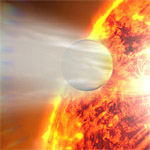
An international team of astronomers using data from NASA’s Hubble Space Telescope has made an unparalleled observation, detecting significant changes in the atmosphere of a planet located beyond our solar system.


The Hubble Space Telescope has discovered a planet, HD 189733b, that is losing some of it’s atmosphere every time a solar flare occurs. Credit: NASA GSFC

The scientists conclude …

Read the rest of this article

The Sun

During a powerful solar blast on March 7, NASA’s Fermi Gamma-ray Space Telescope detected the highest-energy light ever associated with an eruption on the sun. The discovery heralds Fermi’s new role as a solar observatory, a powerful new tool for understanding solar outbursts during the sun’s maximum period of activity.


During a powerful solar blast in March, NASA’s Fermi Gamma-ray …

Read the rest of this article