A magnetic filament on the sun erupted yesterday (May 24th), and the blast hurled a coronal mass ejection in the general direction of Earth. High-latitude sky watchers should be alert for auroras around May 27th when the advancing cloud is likely to deal a glancing blow to our planet’s magnetic field.
Filed under: Astronomy News


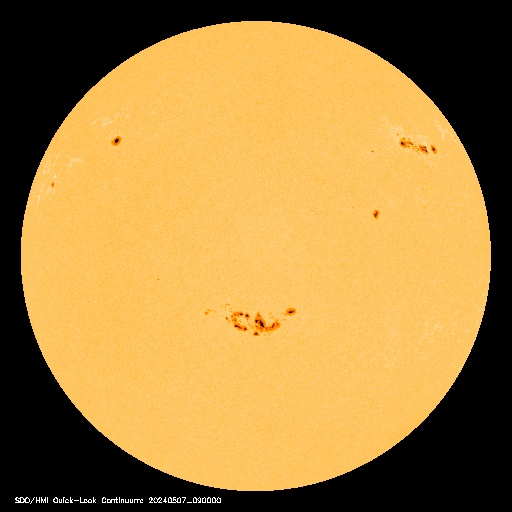
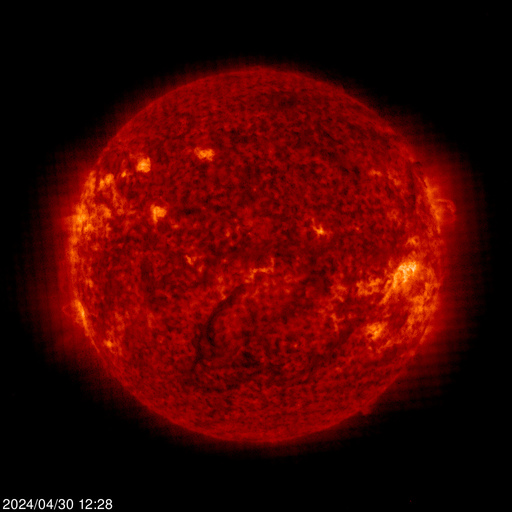
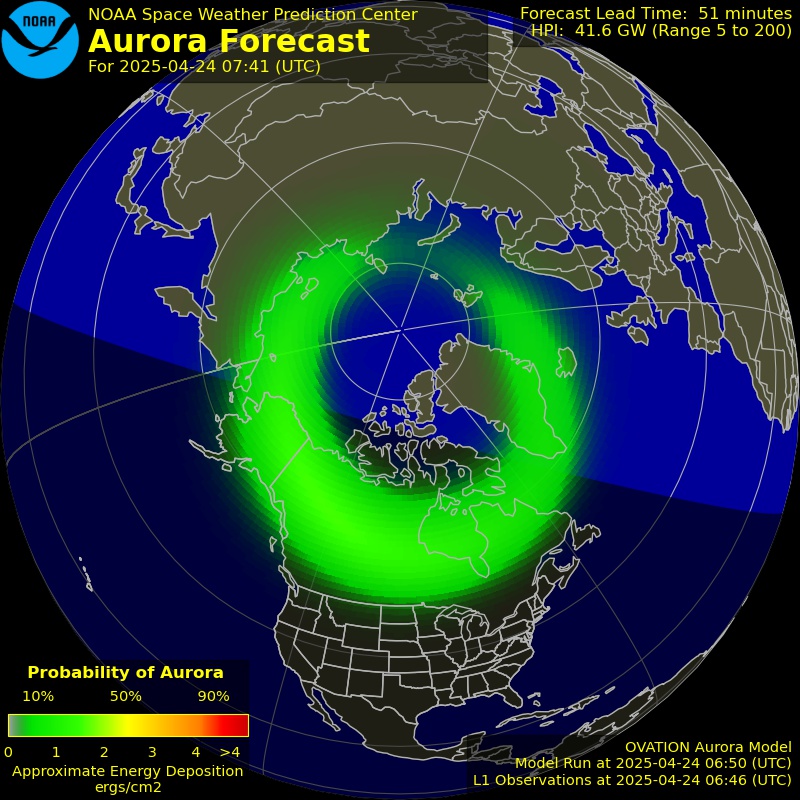
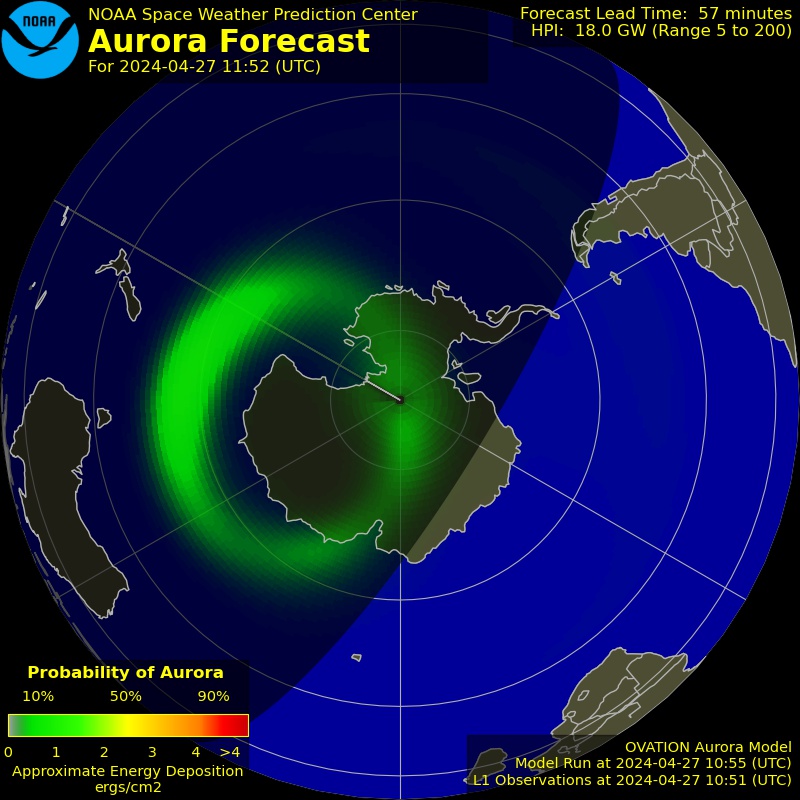
Coronal mass ejections (CMEs) occur all the time. Most of them do absolutely nothing to the earth, since they're aimed in different directions. Of the ones that do reach the earth, more than 99% of them do no more than brighten the aurora. The earth's magnetic field acts as a deflector shield, diverting most of the charged particles away from the earth's surface. On rare occasions, CMEs are strong enough that the charged particles distort the magnetic field, which creates electric current flows in the long, continuous wiring system that makes up the power grid. A CME in 1989 caused power failures in parts of Canada, and a larger CME could do far more damage. Fortunately, CMEs can be detected before they reach the earth, and simple measures (circuit breakers, basically) can protect the power grid by temporarily breaking it down into smaller parts when a CME is due to arrive.
For anyone who’s seen the film "Knowing" – it is pure fiction.
“From August 28 until September 2, 1859, numerous sunspots and solar flares were observed on the sun, the largest flare occurring on September 1st. A massive coronal mass ejection headed directly at Earth due to the solar flare and made it within eighteen hours — a trip that normally takes three to four days.
On September 1 – 2, the largest recorded geomagnetic storm occurred, as recorded by the Colaba observatory near Bombay, India. There are records in Boston that the light was so bright that even at 1:00 AM it was possible to read a newspaper without any other source of light.”