Black Hole

Two X-ray space observatories, NASA’s Nuclear Spectroscopic Telescope Array (NuSTAR) and the European Space Agency’s XMM-Newton, have teamed up to measure definitively, for the first time, the spin rate of a black hole with a mass 2 million times that of our sun.


This artist’s concept illustrates a supermassive black hole with millions to billions times the mass of our …
Read the rest of this article

Earth Day 2015

Gravity is one of the fundamental forces of nature, its invisible grip governing our planet – from the rocks inside to the seas on the surface.

In this edition of Space, we begin our adventure in a massive cave in northern Italy, a space beneath the surface of the Earth that is so big it has an effect on the …

Read the rest of this article

Peering deep into the vast stellar halo that envelops our Milky Way galaxy, astronomers using NASA’s Hubble Space Telescope have uncovered tantalizing evidence for the possible existence of a shell of stars that are a relic of cannibalism by our Milky Way.


This illustration shows the disk of our Milky Way galaxy, surrounded by a faint, extended halo of old …

Read the rest of this article

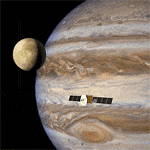
The JUpiter ICy moons Explorer mission, JUICE, will carry a total of 11 scientific experiments to study the gas giant planet and its large ocean-bearing moons, ESA announced today.


Artist impression of JUICE, the JUpiter ICy moons Explorer mission, in the Jovian system. Image credit: ESA/AOES

JUICE is the first Large-class mission in ESA’s Cosmic Vision 2015–2025 programme. Planned for …

Read the rest of this article

Curiosity Mars Rover

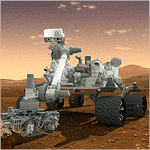
NASA’s Mars rover Curiosity has relayed new images that confirm it has successfully obtained the first sample ever collected from the interior of a rock on another planet. No rover has ever drilled into a rock beyond Earth and collected a sample from its interior.

Transfer of the powdered-rock sample into an open scoop was visible for the first time …

Read the rest of this article

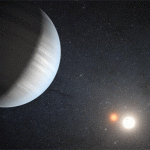
NASA’s Kepler mission scientists have discovered a new planetary system that is home to the smallest planet yet found around a star similar to our sun.

The planets are located in a system called Kepler-37, about 210 light-years from Earth in the constellation Lyra. The smallest planet, Kepler-37b, is slightly larger than our moon, measuring about one-third the size of …

Read the rest of this article

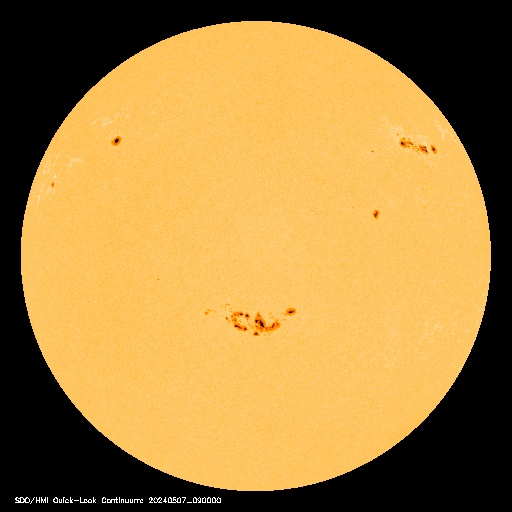
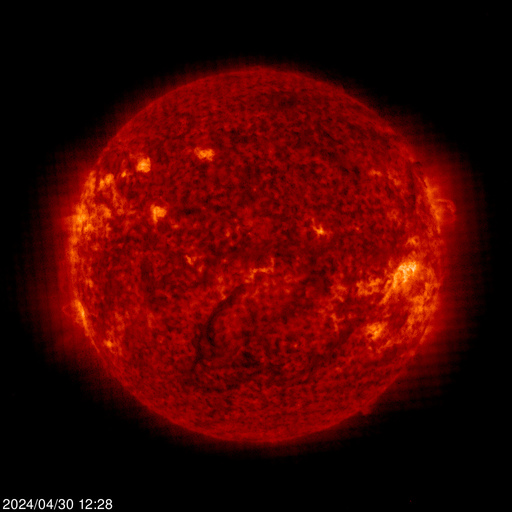
The Sun

ESA’s Herschel space observatory has detected a cool layer in the atmosphere of Alpha Centauri A, the first time this has been seen in a star beyond our own Sun. The finding is not only important for understanding the Sun’s activity, but could also help in the quest to discover proto-planetary systems around other stars.


One of the great curiosities …

Read the rest of this article

Back in November, the BBC aired a documentary called “Do We Really Need The Moon?” in which Dr. Maggie Aderin-Pocock (a Moon fanatic) explores our intimate relationship with the Moon. Besides causing the tides, the moon dictates the length of a day, the rhythm of the seasons and the very stability of our planet (the documentary originally aired in 2011). …

Read the rest of this article

I happened to be surfing through various random sites today when I came across this site that’s actually been created as an experiment by some of the bods over at Google.

Called “100,000 Stars“, it’s an interactive visualization of the stellar neighborhood created for the Google Chrome web browser – don’t worry it works just as well in …

Read the rest of this article

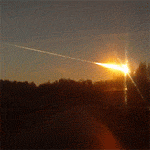
I’m sure you heard about the damage and injuries caused by a meteor detonating over Chelyabinsk in Russia last week. Russia, seems a bit unfortunate in this respect as a similar, but larger, event occurred over Siberia in 1908 – The Tunguska Event and another event – the Sikhote-Alin event – happened in 1947. The Chelyabinsk meteor blast was the …

Read the rest of this article