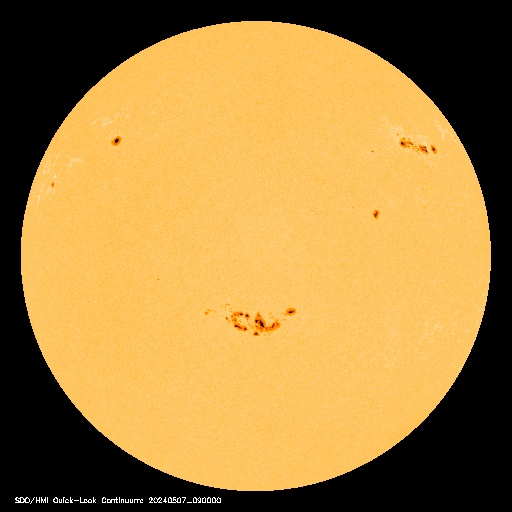
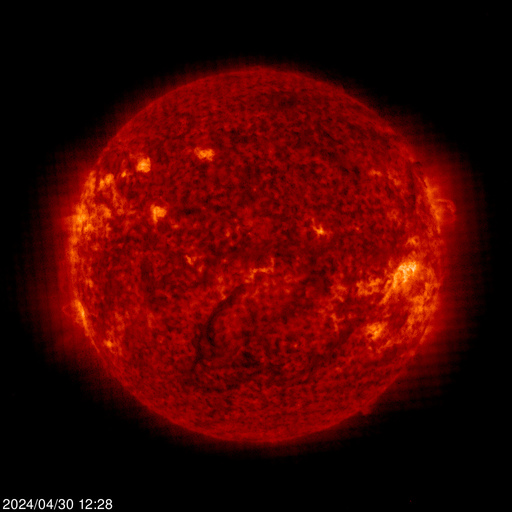
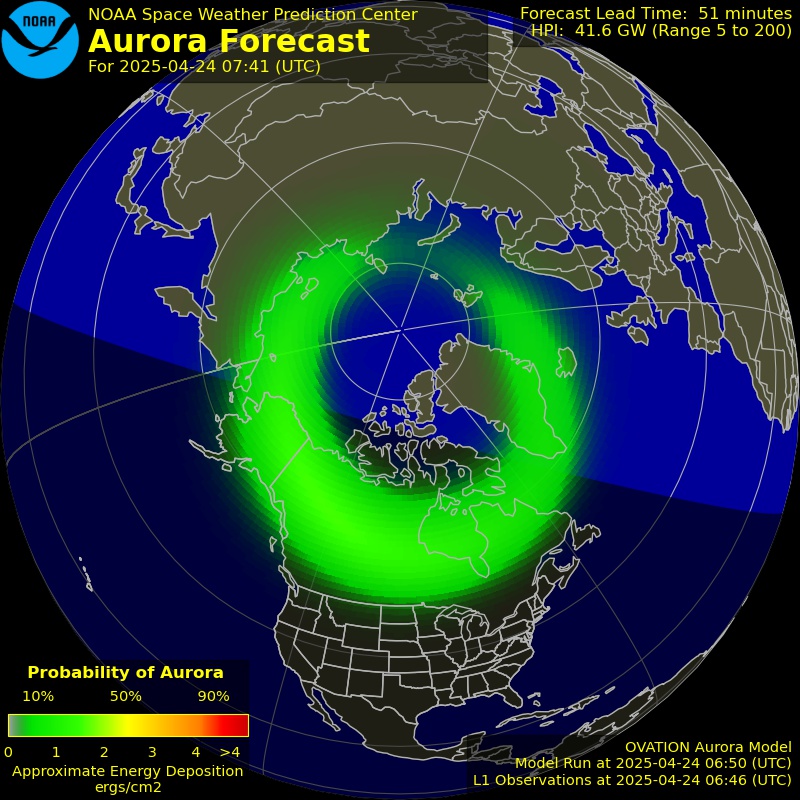
As Earth’s magnetic field reverberates from the impact of one Coronal Mass Ejection (CME) on March 8th, a second CME is on the way.

Big sunspot AR1429 unleashed an M6-class solar flare yesterday (March 9th), and the eruption hurled a cloud of plasma almost directly toward Earth.

Forecasters say the CME could reach our planet during the late hours of …

Read the rest of this article

NASA’s Gravity Recovery And Interior Laboratory (GRAIL) spacecraft orbiting the moon officially have begun their science collection phase. During the next 84 days, scientists will obtain a high-resolution map of the lunar gravitational field to learn about the moon’s internal structure and composition in unprecedented detail. The data also will provide a better understanding of how Earth and other rocky …

Read the rest of this article
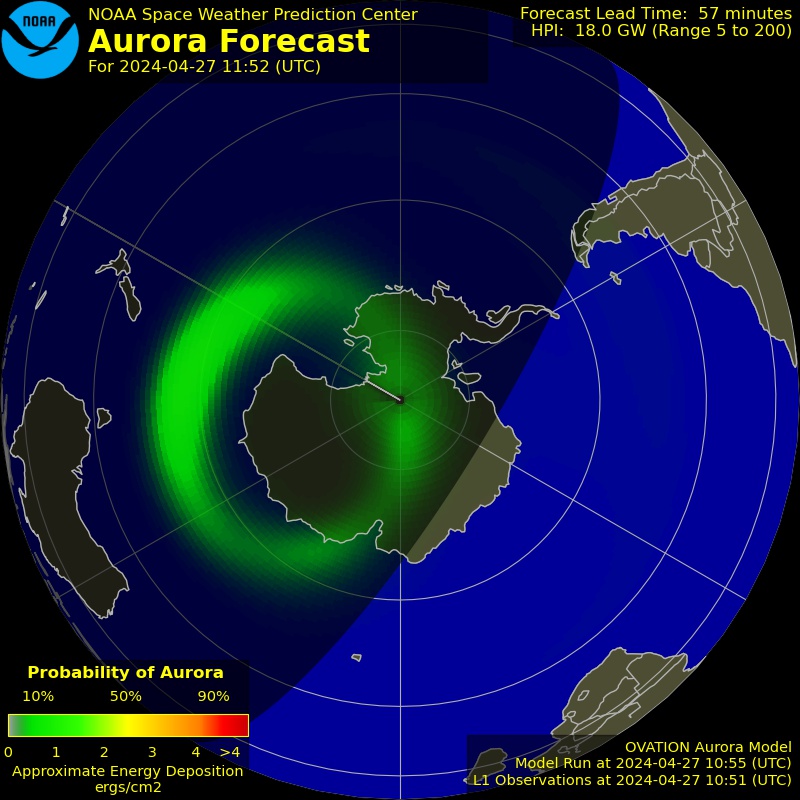
A chance alignment of planets during a passing gust of the solar wind has allowed scientists to compare the protective effects of Earth’s magnetic field with that of Mars’ naked atmosphere. The result is clear: Earth’s magnetic field is vital for keeping our atmosphere in place.


This animation shows how a particular stream of the solar wind sweeps through space, …

Read the rest of this article

A new video produced by NASA and narrated by actor Peter Cullen of “Transformers” fame celebrates humankind’s inherent need to explore through the past, present and future.

Why do we explore? Simply put, it is part of who we are, and it is something we have done throughout our history. In NASA’s new video, “We Are the Explorers,” we take …

Read the rest of this article

Big sunspot AR1429 has unleashed another major flare–an X5-class eruption on March 7th at 00:28 UT.

As a result of the blast, a radiation storm is underway and a CME will likely hit Earth’s magnetic field in a day or so.

Geomagnetic storms are already in progress at high latitudes due to earlier eruptions from the active sunspot. Last night, …

Read the rest of this article

NASA’s Cassini spacecraft has “sniffed” molecular oxygen ions around Saturn’s icy moon Dione for the first time, confirming the presence of a very tenuous atmosphere. The oxygen ions are quite sparse – one for every 0.67 cubic inches of space (one for every 11 cubic centimeters of space) or about 2,550 per cubic foot (90,000 per cubic meter) – show …

Read the rest of this article

Glowing green and red, shimmering hypnotically across the night sky, the aurora borealis is a wonder to behold. Longtime sky watchers say it is the greatest show on Earth.

It might be the greatest show in Earth orbit, too. High above our planet, astronauts onboard the International Space Station (ISS) have been enjoying an up-close view of auroras outside their …

Read the rest of this article

Astronomers using data from NASA’s Hubble Telescope have observed what appears to be a clump of dark matter left behind from a wreck between massive clusters of galaxies. The result could challenge current theories about dark matter that predict galaxies should be anchored to the invisible substance even during the shock of a collision.


This composite image shows the distribution …

Read the rest of this article

Big sunspot AR1429, which emerged over the weekend, is crackling with strong flares.

This morning the active region produced an X1-class eruption and a bright coronal mass ejection (CME). This is the strongest so far, occuring on March 5th at 0413 UT.

The CME appears set to deliver a glancing blow to Earth’s magnetic field in the days ahead, possibly …

Read the rest of this article

On Feb. 29, NASA successfully conducted another drop test of the Orion crew vehicle’s entry, descent and landing parachutes high above the Arizona desert in preparation for the vehicle’s orbital flight test in 2014. Orion will carry astronauts deeper into space than ever before, provide emergency abort capability, sustain the crew during space travel and ensure a safe re-entry and …

Read the rest of this article